Summary
- I wanted a filter paper, made from household materials, that could filter out clay particles.
- Printer paper and notebook paper fulfilled this purpose, but passed water very slowly
- I found that by soaking paper in vinegar to remove their calcium carbonate filler, they would pass water more freely.
Requirements for Filter Paper
I recently needed to filter water out of a clay slurry for one of my projects. Since laboratory filter-paper wasn’t available, I had to try some common household filtration materials.
In Chemical Manipulation, Michael Faraday writes,
487. […] Unsized paper, cloth, flannel, tow, sponge, sand, pulverized glass, flints, porous stones, and earthenware, with many other substances, are used on different occasions, but the first is almost exclusivey resorted to in the laboratory, a few of the others now and then being resorted to only on particular occasions.
[…]
501. It is no easy matter for the chemist to obtain unobjectionable filtering paper… It should be so porous as to admit the free and ready passage of fluids; so close as to retain the finest solid particles; so strong as to bear the weight of a considerable quantity of fluid; so pure as to give nothing to the solution, or if heated with the substance retained upon it, to occasion no mixture of ashes. […]
502. It is amongst the thinner varieties of unsized paper, or white blotting paper, kept by some of the stationers, that the chemist will probably find the best kind suited to his purpose. […]
I originally wanted to use paper towels or coffee filters because of their high wet strength, but unfortunately they were too coarse to filter out clay particles. (Although maybe the brown paper towels common in commercial bathrooms would work.) Printer paper and notebook paper were fine enough to filter out clay; as was newspaper, and though its ink might be objectionable in chemical experiments, it can probably be used for most hobby applications.
Removing Filler from Paper
My idea was to make the papers more porous by removing the filler added to them to make the paper smoother, brighter, and more opaque.
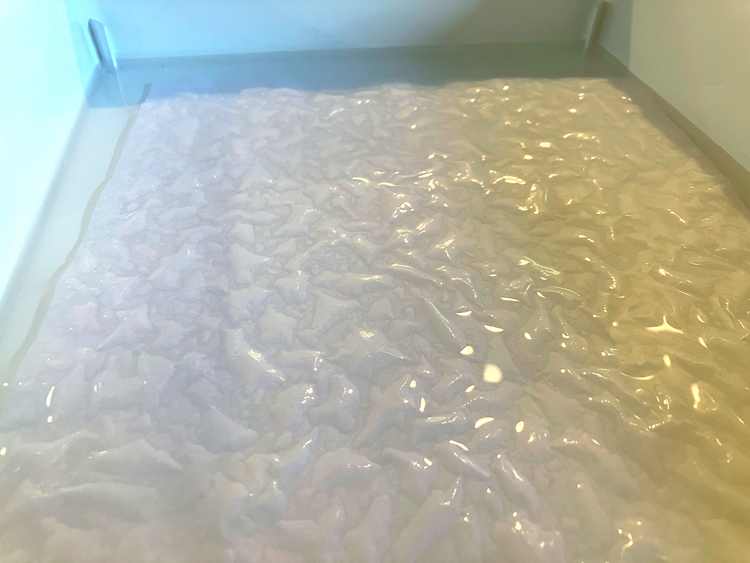
According to online sources, most modern printing/writing papers use calcium carbonate filler, which I dissolved by soaking the paper for about 5 minutes in a tray of vinegar. Taking inspiration from darkroom techniques in photography, I gently rocked the trays back and forth to evenly distribute the vinegar over the paper. Carbon dioxide produced by the reaction CaCO3 + 2H+ → Ca+ + CO2 + H2O caused blisters to appear on the paper, which slowly got smaller and disappeared as the gas escaped.
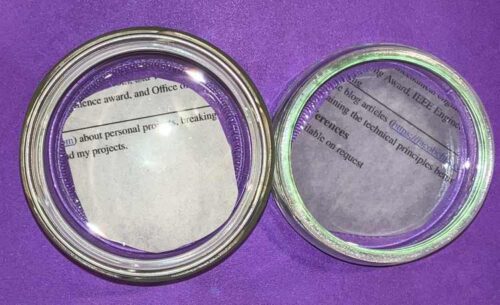
As the calcium carbonate dissolved, a marked increase in translucence was seen in the wet paper. When placed over a dark surface, the original paper looked fairly white, whereas the dark surface could be seen through the un-filled paper. To determine when the filler was completely dissolved in the vinegar, I put a bit of dark material underneath the paper, and checked that I could see its color fairly well.
After the paper was done soaking, I very carefully pulled it out of the vinegar put it into a tray of water to rinse for a few minutes, again rocking the tray. After that, the paper was dried by putting it between two t-shirts and pressing it under a few heavy books.
Evaluating Filter Papers
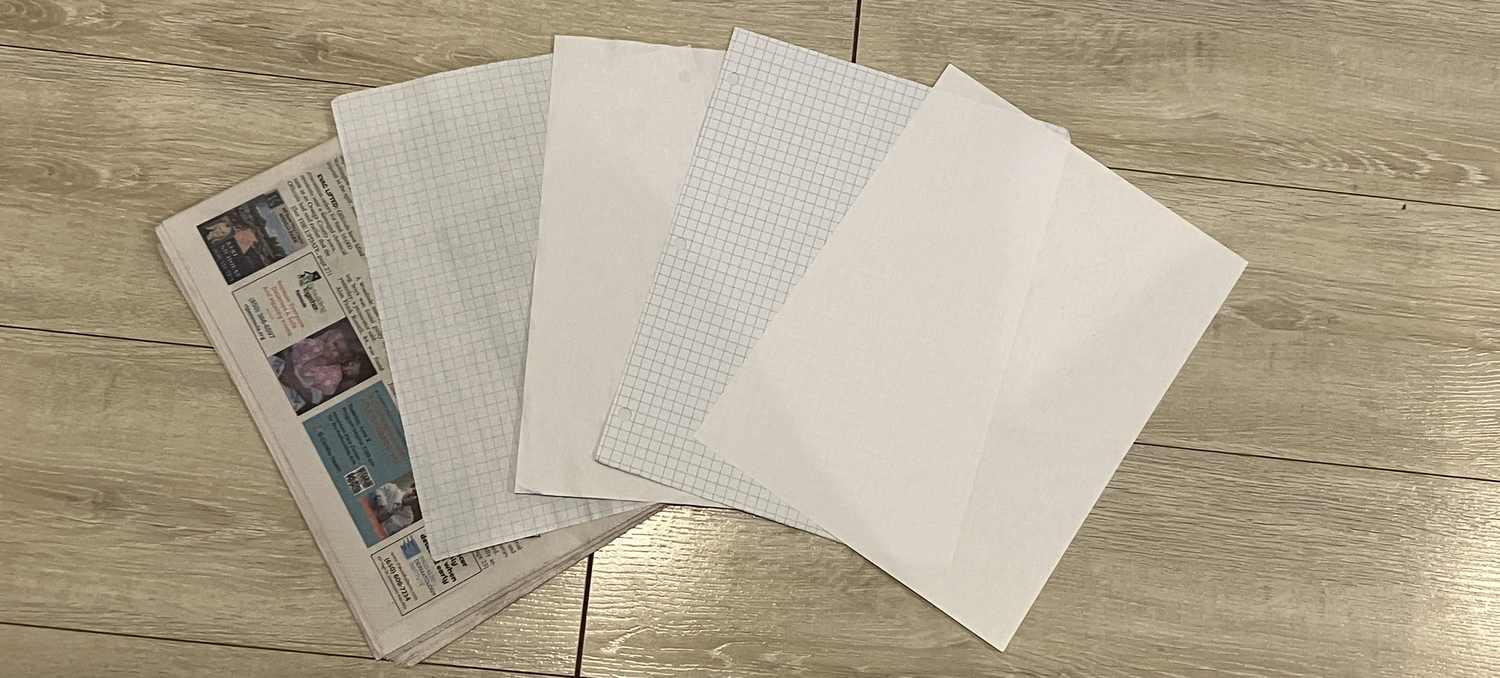
I tested original and un-filled printer paper, original and un-filled notebook paper, and newspaper.
Qualitative Evaluation
502. […] It should be so strong, that a single filter of it, capacious enough to hold a pint of water, should not break with that quantity, even though some degree of agitation be given to the funnel containing it. Its porosity, that is to say, its comparative freedom from size, for it is mostly sized to a slight degree, may be judged of by holding it to the tongue, and observing how it absorbs moisture; and by a cautious pull its strength may be ascertained whilst in such moistened state. […]
—Chemical Manipulation
The un-filled papers felt noticeably more absorbent than the original papers. All the papers felt about equally strong when I tried pulling them apart by hand, and were much weaker than paper towels and coffee filters.
Permeability to Water
502. […] The student who is unused to the examination of papers, will however better judge of its capability of allowing fluid to pass, by actual trial with water; a pint filter filled with clean water, should allow the fluid to run in a considerable stream.
—Chemical Manipulation
This was the procedure I used to compare the different papers’ water permeabilities:
- Fold each paper into a pleated filter (like a coffee filter)
- Place the filter in a 16 oz. funnel
- Pour in 200 mL of water
- Record the amount of water passed after 5 minutes
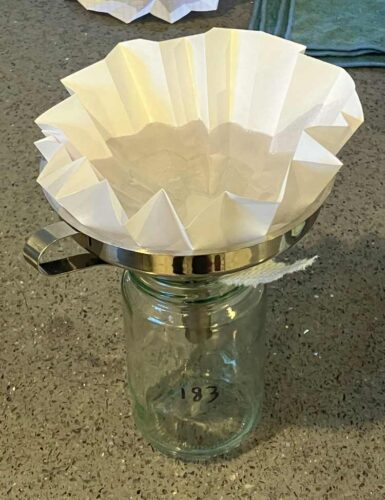
escape as water drips in

Permeability to Clay
In order to verify the papers’ integrity after treating in vinegar, I also poured a clay slurry each filter. None of the papers passed any clay. However, some of the filters broke after a short time due to the clay’s high density; this happened only on filters placed over a narrow-angle funnel with a large opening, rather than a wide-angle funnel with a small opening.
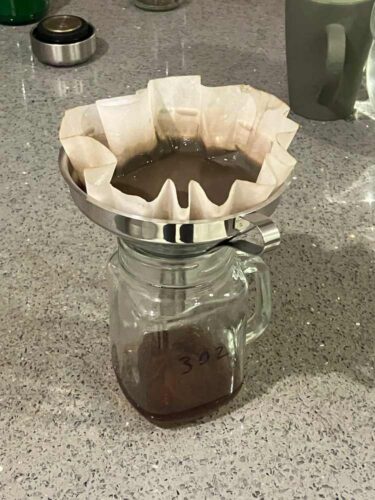
particles are present
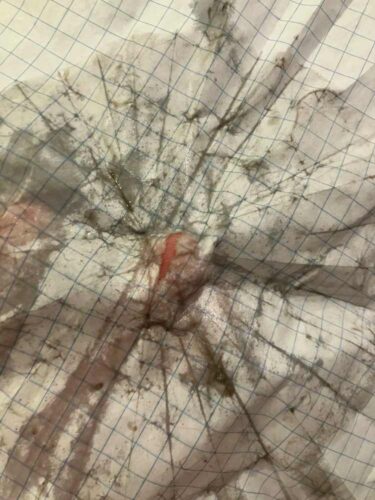

right: filter more likely to break in narrow funnel with large opening
Ash Test
503. The best method of judging of the purity of paper is to burn it and examine its ashes: the fewer it yields the better is it adapted for filters. A demy sheet [17.5″ × 22.5″] should not yield more than one and a half or two grains of ashes altogether. If it contains more, their solubility or insolubility should be observed, that the student may be aware of the impurities, that may probably be imparted to solutions in very delicate experiments. In minute cases of investigation, sulphuric acid may be frequently traced to the sulphate of lime existing in the filtering paper.
—Chemical Manipulation
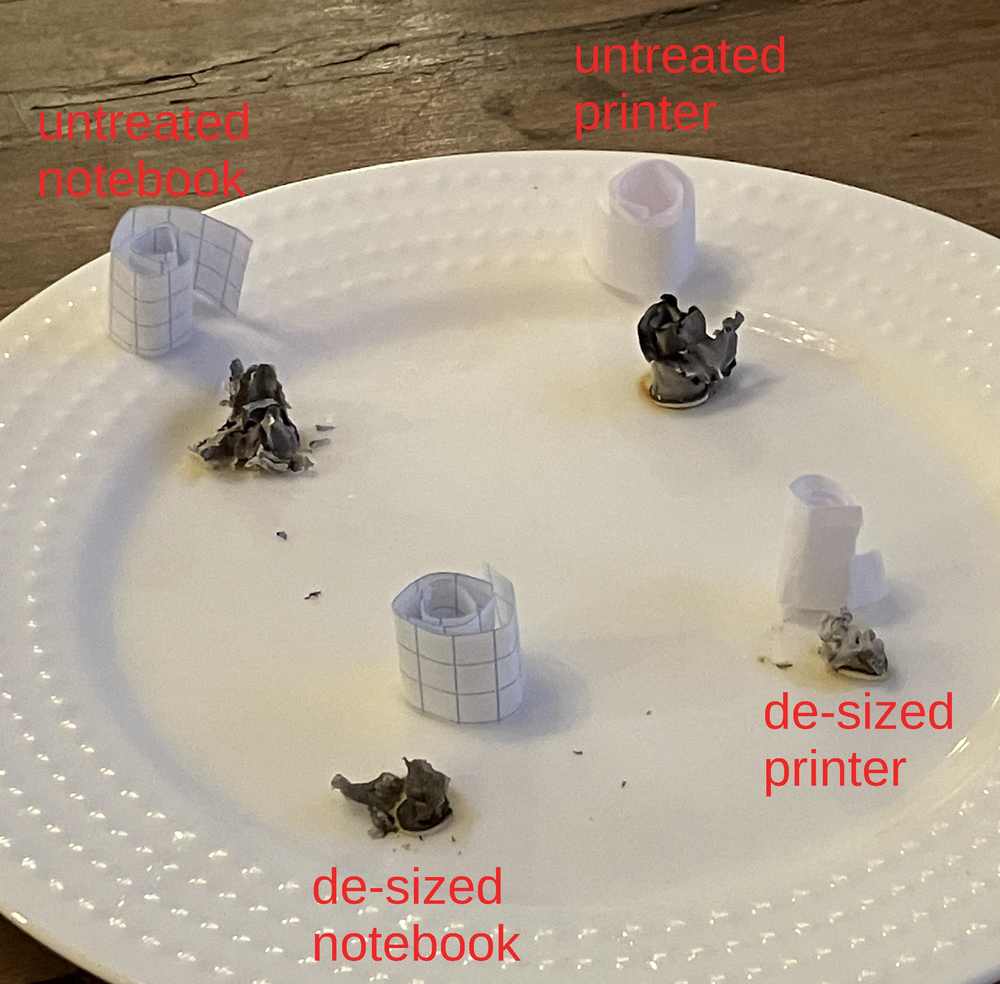
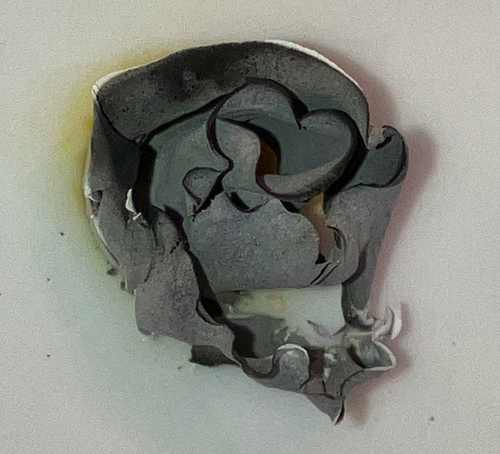
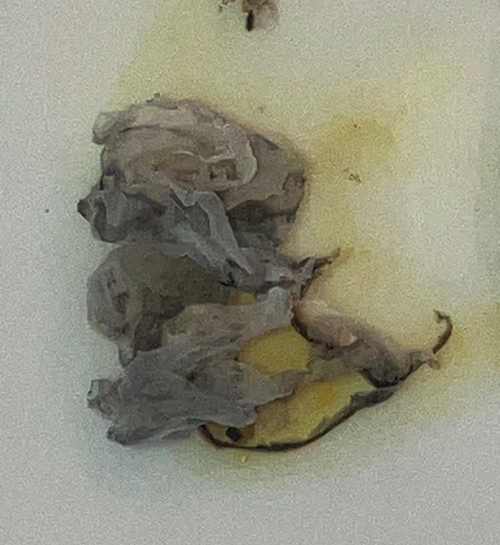
A very obvious difference was observed in the ashes of original and un-filled papers: whereas the original papers left a thick sheet of ash behind, the un-filled papers had ash that was much thinner and lighter. The difference was like that between felt and gauze.