-

This Fixit Clinic occurred at the Maker Nexus in Sunnyvale. The first item was a Saeco Vienna Plus espresso machine. It automated the entire brewing process, including grinding and measuring the coffee, dispensing it into the “brew group” (the removable assembly where the actual brewing takes place), tamping it down, forcing water through the grounds, and ejecting the puck. Essentially, it worked as follows: A burr grinder both ground the coffee and pushed it into the dispenser. The dispenser was a small chamber with a trapdoor in the bottom to release the coffee into the brew group, and one movable…
-

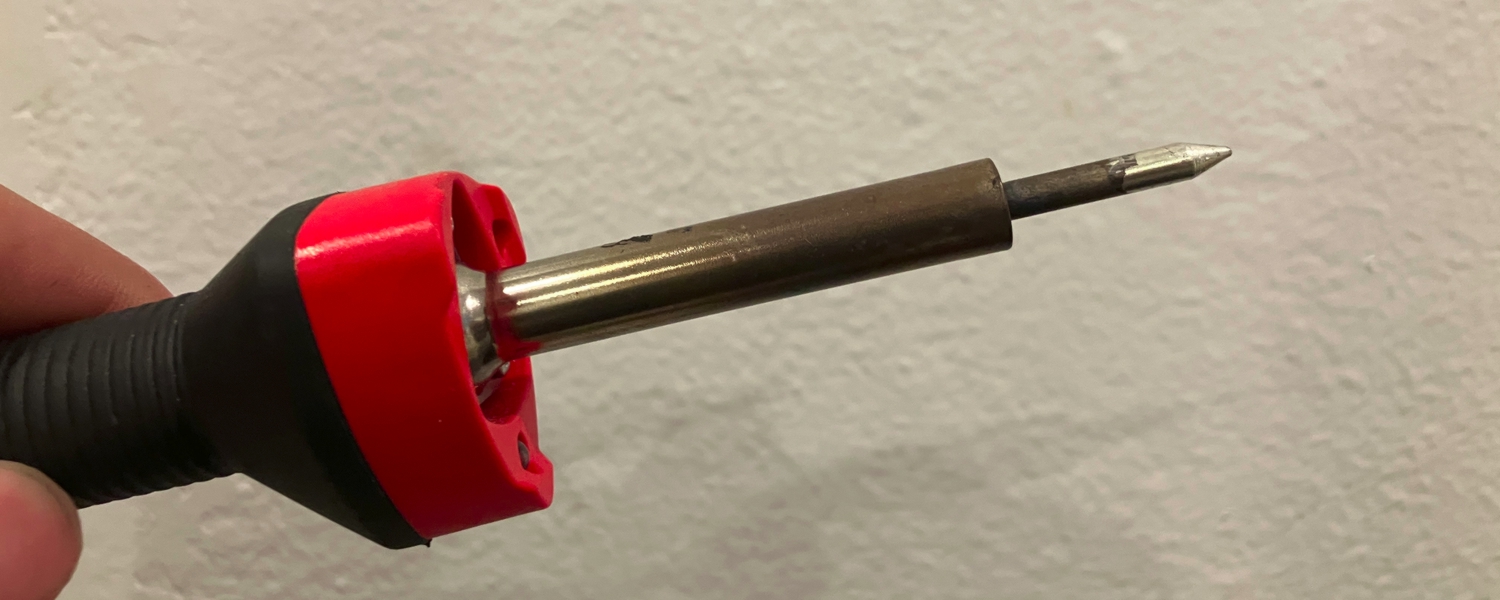
Soldering iron tips are made of copper plated with a very thin layer of iron. Unfortunately, this plating can oxidize if you don’t clean and “tin” it (that is, coat it with solder to protect it), and this can be very annoying because the oxidation is difficult to get off and prevents the solder from wetting the tip. There are a number of ways to get stubborn oxidation off. The recommended way is use some sort of tinning compound designed especially for this purpose, like sal ammoniac. Over the years, I’ve tried a few alternative methods, mostly without success. First…
-

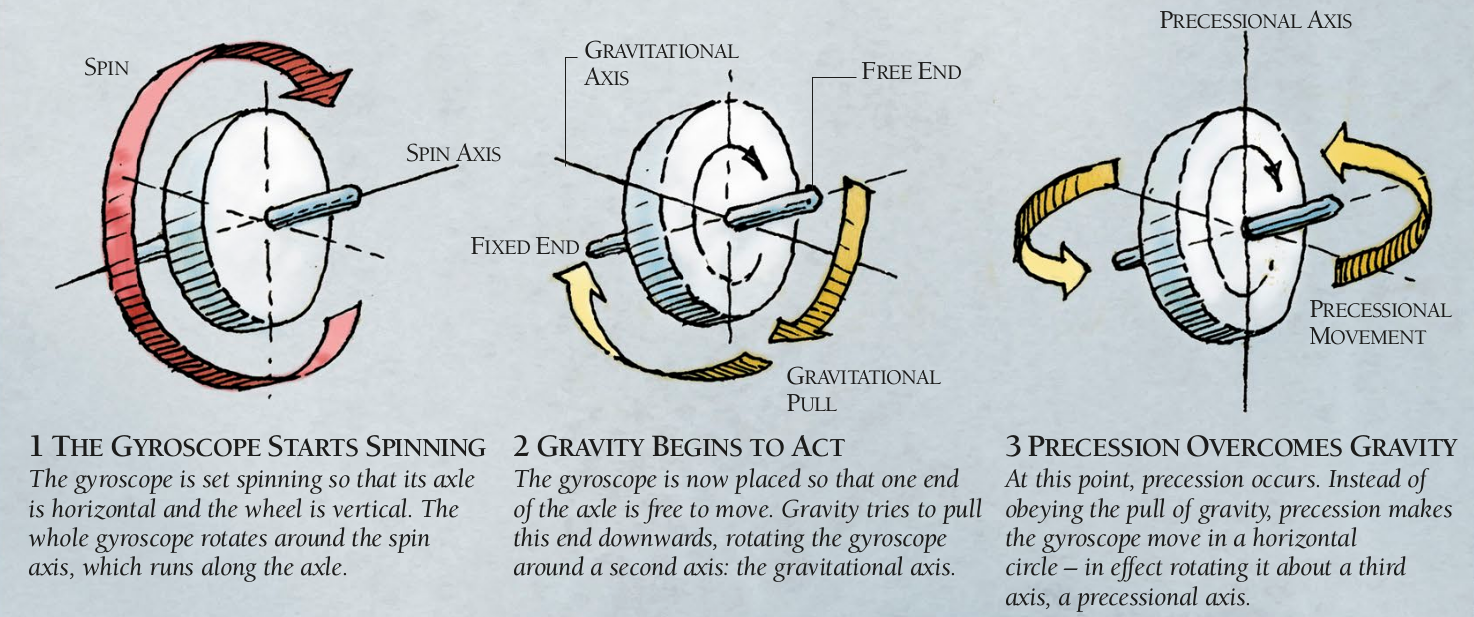
A spinning gyroscope can balance on a pivot, defying gravity by remaining horizontal while resting just on the tip of its axle. Instead of falling off the pivot, the gyroscope circles around it. The explanation for this amazing feat lies in the effects of precession. Like all other objects, the rotating wheel of the gyroscope is subjected to gravity. However, as long as the gyroscope spins, precession overcomes gravity by transforming it into a force that causes the gyroscope to circle instead of falling. The Way Things Work by David Macaulay and Neil Ardley At the suggestion of my physics…
-

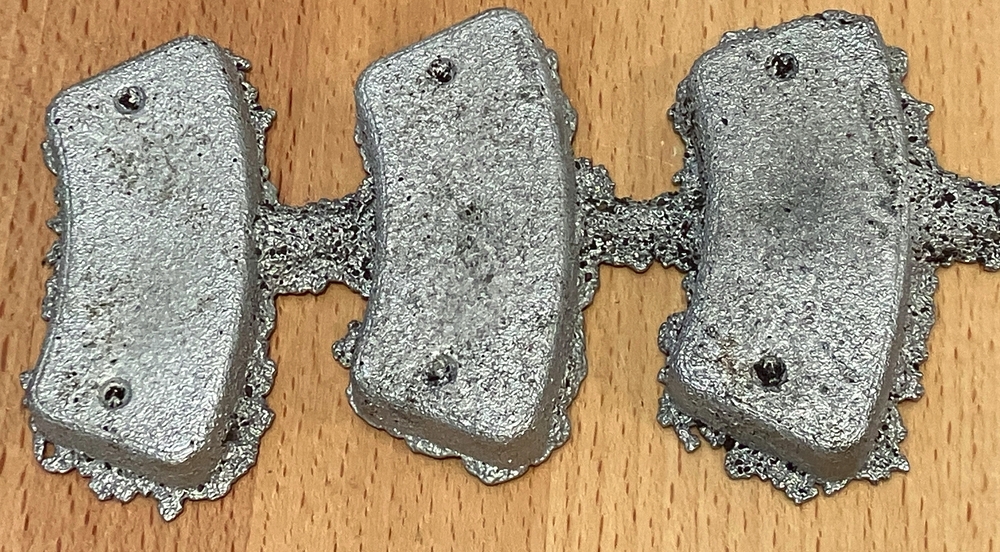
I made a gyroscope. Part of that involved casting 12 zinc weights to go around the rim of its rotor, which gave me a lot of practice ramming and pouring molds, and I learned a lot. Firstly, for my extremely rudimentary dirt-bonded sand, the right moisture level is just enough to turn the sand noticeably dark, indicating that the clay is fully wetted with water, but not so much that it sticks to the rammer. While many hobbyists on the internet recommended using a peen-shaped rammer to better compact the sand, I found it easier to simply ram the …
-
This Repair Café took place at the Mountain View Senior Center from 11:00 AM to 3:00 PM. First, I worked on an Instant Pot® Vortex® Plus 10 Quart air fryer that wouldn’t power on; the owner said it had just stopped working one day with no major incident preceding it. After some light disassembly (prying off the top vent and removing the top cover), we found that the bimetallic thermostat had been tripped and needed to be manually reset with a little button. I’m not sure why the air fryer was designed the way it was, with a difficult-to-access manual-reset…
-
This Fixit Clinic was held at the Hayward Library. There weren’t very many people. I worked with another fixer on a Japanese foot-warming table that wouldn’t temperature regulate and stayed on constantly. It was constructed with two quartz heating elements controlled by a bimetallic thermostat mounted on its underside, with reflectors to direct all the radiation downwards. They were protected by a steel cage, with a sort of felt coating to decrease its thermal conductivity in case someone contacted it. The table was meant to be completely covered by a blanket to create an enclosed space underneath it to be…
-

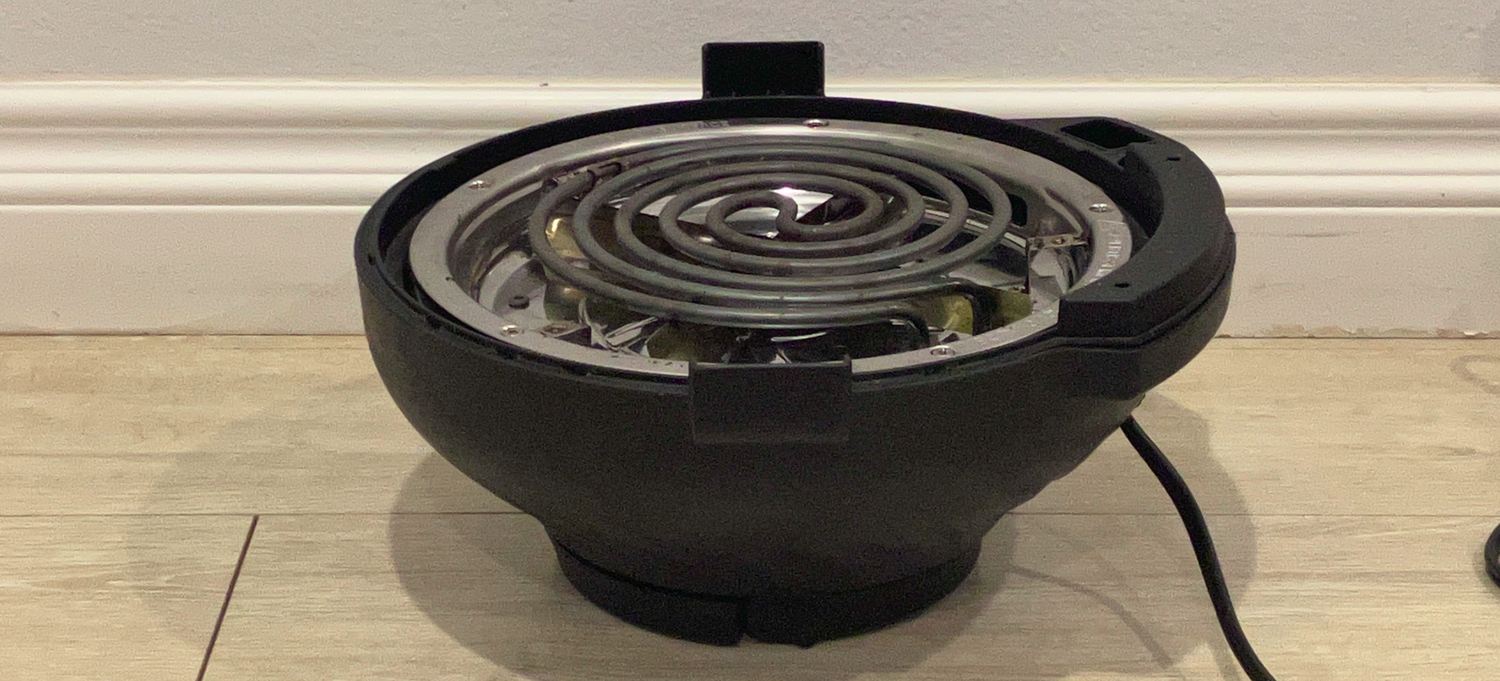
WARNING: This is quite a dangerous project if you don’t know what you’re doing. Take proper precautions if you decide to try this: never leave the stove unattended, plug it into a GFCI outlet, use proper wire connections, and use a cord of the proper gauge. Above all, USE COMMON SENSE; IF A SITUATION LOOKS DANGEROUS, IT IS. Having come upon an Instant Pot® Duo Crisp™ Air Fryer lid, I decided to take it apart and convert it to an electric stove. Disassembly Disassembly was pretty easy, with the exception of the first two non-obvious steps: Take off the intake…
-
This Repair Café was held at the Museum of American Heritage. First, there was a DeLonghi EC702 espresso machine that wasn’t providing sufficient pressure to push the water through the coffee grounds. Unfortunately, the owner forgotten to bring the portafilter (filter basket), so we couldn’t confirm this; running the machine without the filter in place resulted in very slow water flow. Anyhow, his research led him to conclude that the pump was faulty; he wasn’t able to replace it himself because he didn’t have the proper screwdriver to remove the Torx security screws. We replaced the pump and found that…
-

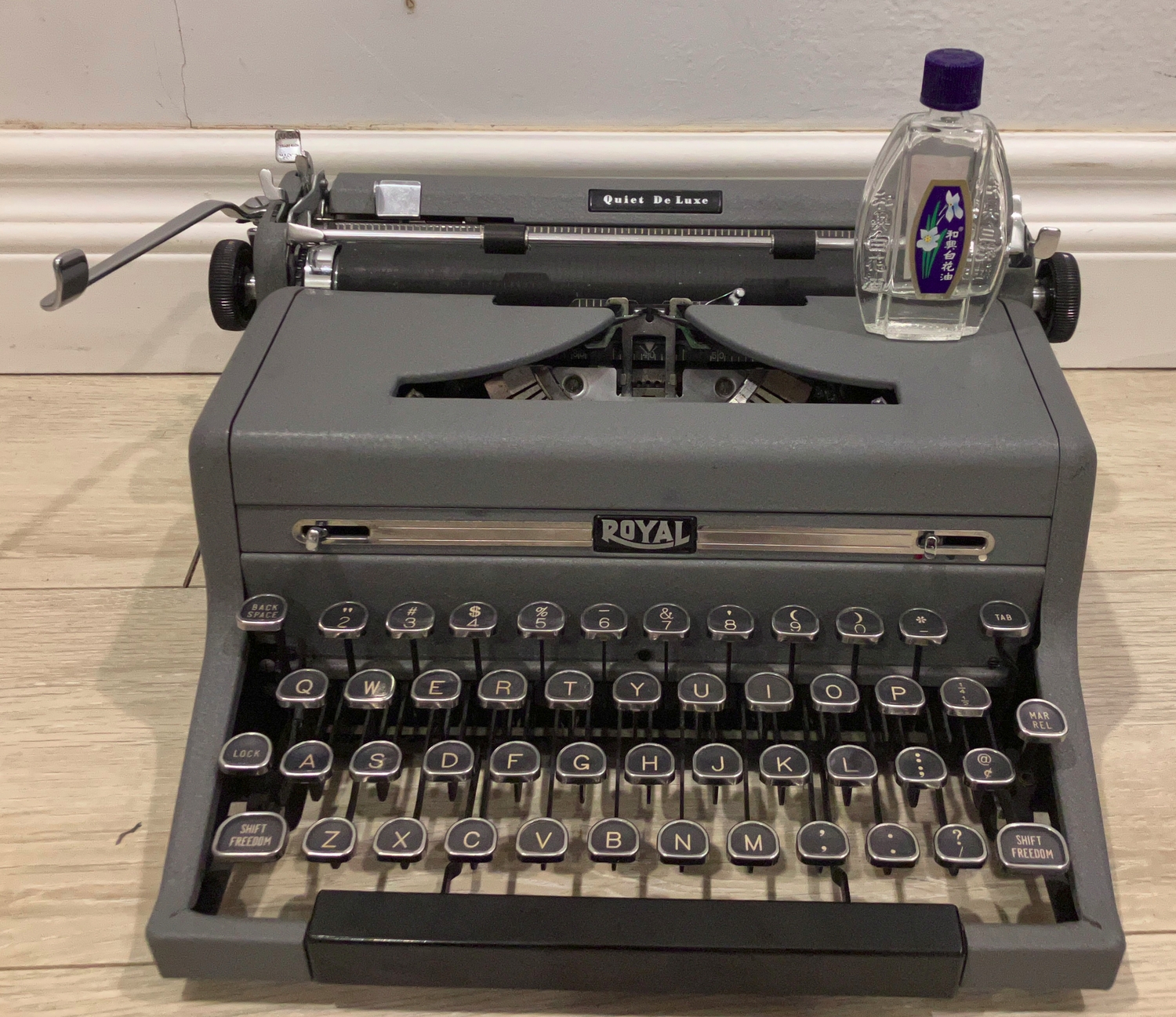
Introduction There is a medicinal ointment popular in Hong Kong called 白花油 (“White Flower Oil”) that produces a cool, minty feeling when rubbed on the skin and is used as a pain and itch reliever. (A similar product called 风油精 (“Wind Oil Essence”) is used in Mainland China.) Interestingly, one of its main ingredients, which makes up 40% of it, is methyl salicylate, a chemical often used to soften rubber. The specific use case I had in mind was restoring some grip to the time-stiffened rubber feet of an old typewriter. They had deteriorated to the point where the …
-

Introduction and Rules 24 is a card game in which players try to use the basic arithmetic operations and each of four numbers exactly once to get the number 24. I play the game with my friends as follows: in each round, 4 cards are dealt face-up, and the first person to yell out a solution for how to get 24 wins those cards. J is 11, Q is 12, K is 13, and A is 1. Since it is occasionally impossible to find a solution, the first player to declare the round “impossible” receives the cards after the rest…