-

This was my 2025 Synopsys Science Fair project. Regrettably, I didn’t get to spend as much time as I’d have liked on it. Introduction Clay is an extremely important material because it is cheap (often literally dirt on the ground), durable, and easy to work by pressing, casting, or forming. However, drying clay parts presents challenges since the ideal drying rate is a balance between minimizing drying time and preventing uneven drying. This is particularly important for prototyping or experimentation where many iterations must be made in sequence. In practice, an ideal drying rate is difficult to obtain in ambient…
-

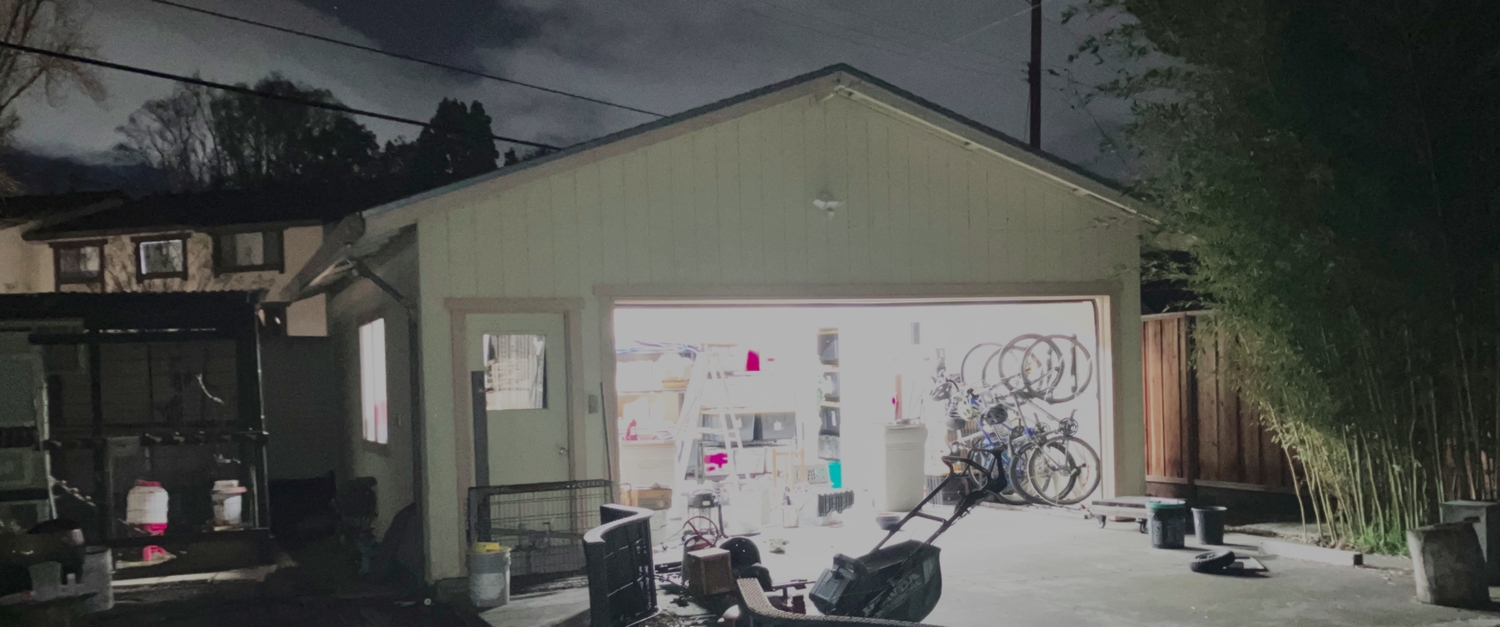
A problem that I’ve had is that I keep forgetting to close the garage door at night, which lets in the elements (and also rats). After being pestered for some time by my parents to find a solution, I finally came up with this. The solution is to turn on the overhead lights any time the garage door is open at night. Since the garage is in plain view of my house, this makes it really obvious when the door is open. Unlike something that automatically closes the door, a solution like this doesn’t need control of the garage door…
-

This repair was not completed at a Repair Café or Fixit Clinic, but it was kind of interesting so I’m writing a post about it. Machining often involves arithmetic on very precise numbers. This is very tedious, so having a small calculator is very helpful. Being of a helpful nature, my school’s machine-shop has a few calculators, but nearly all of them are broken for some reason or another. This post is about fixing one of them. The calculator in question is a Casio FX-115S. It is a scientific calculator powered by either a solar panel or a button-cell battery.…
-

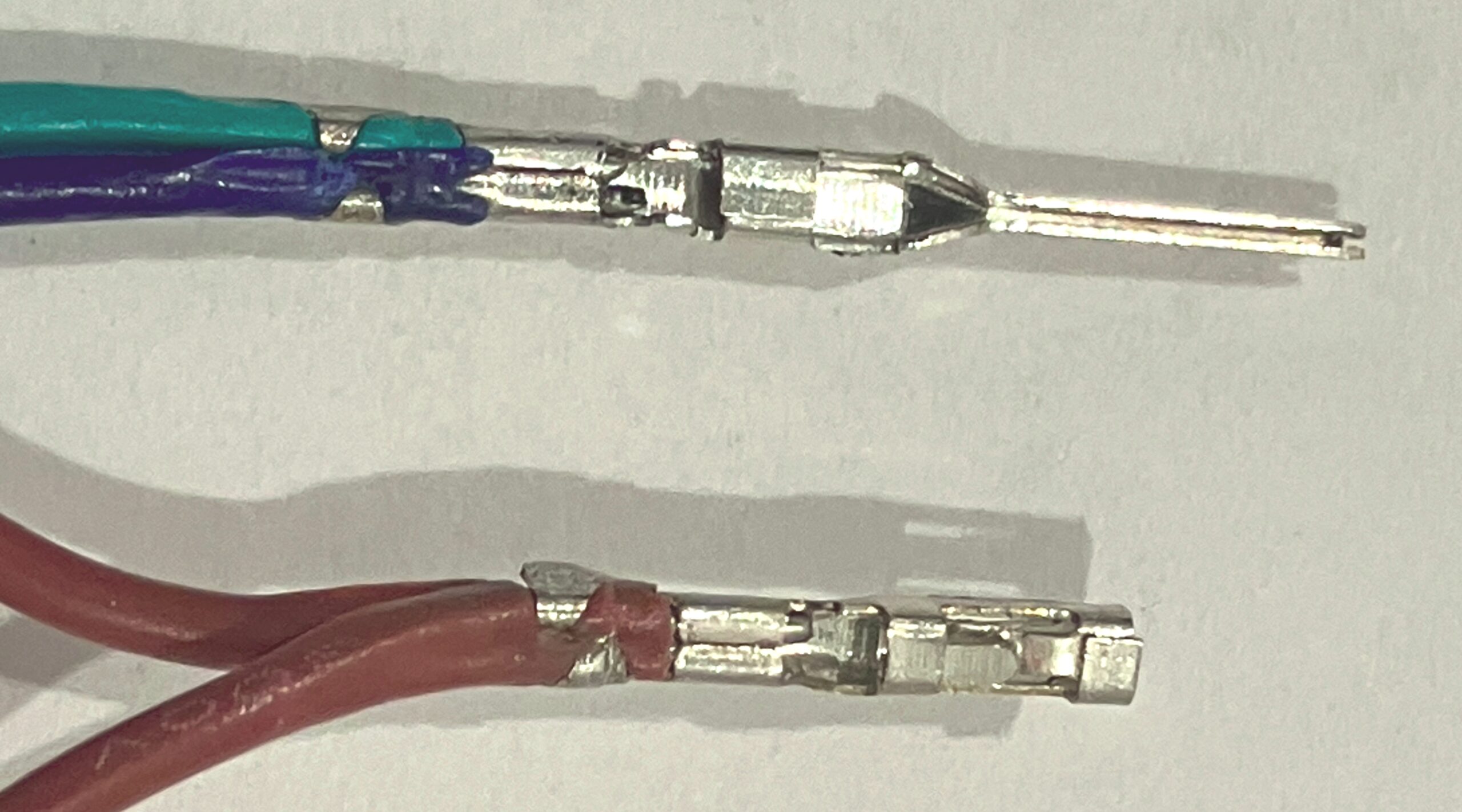
Part of my bicycle-lighting project involved crimping a splitter cable to split the output of the dynamo to the front and rear lamps. I used a DuPont connector for that because I had recently bought, after 4 years of consideration, a proper DuPont crimper. The input and output wires were 24 AWG solid wires with an insulation diameter of about 1.3 mm. A DuPont crimp actually consists of 2 crimps, one onto the stripped wire, and another onto the insulation for strain relief. The biggest challenge when attempting to crimp 2 wires is getting the insulation of both properly into…
-

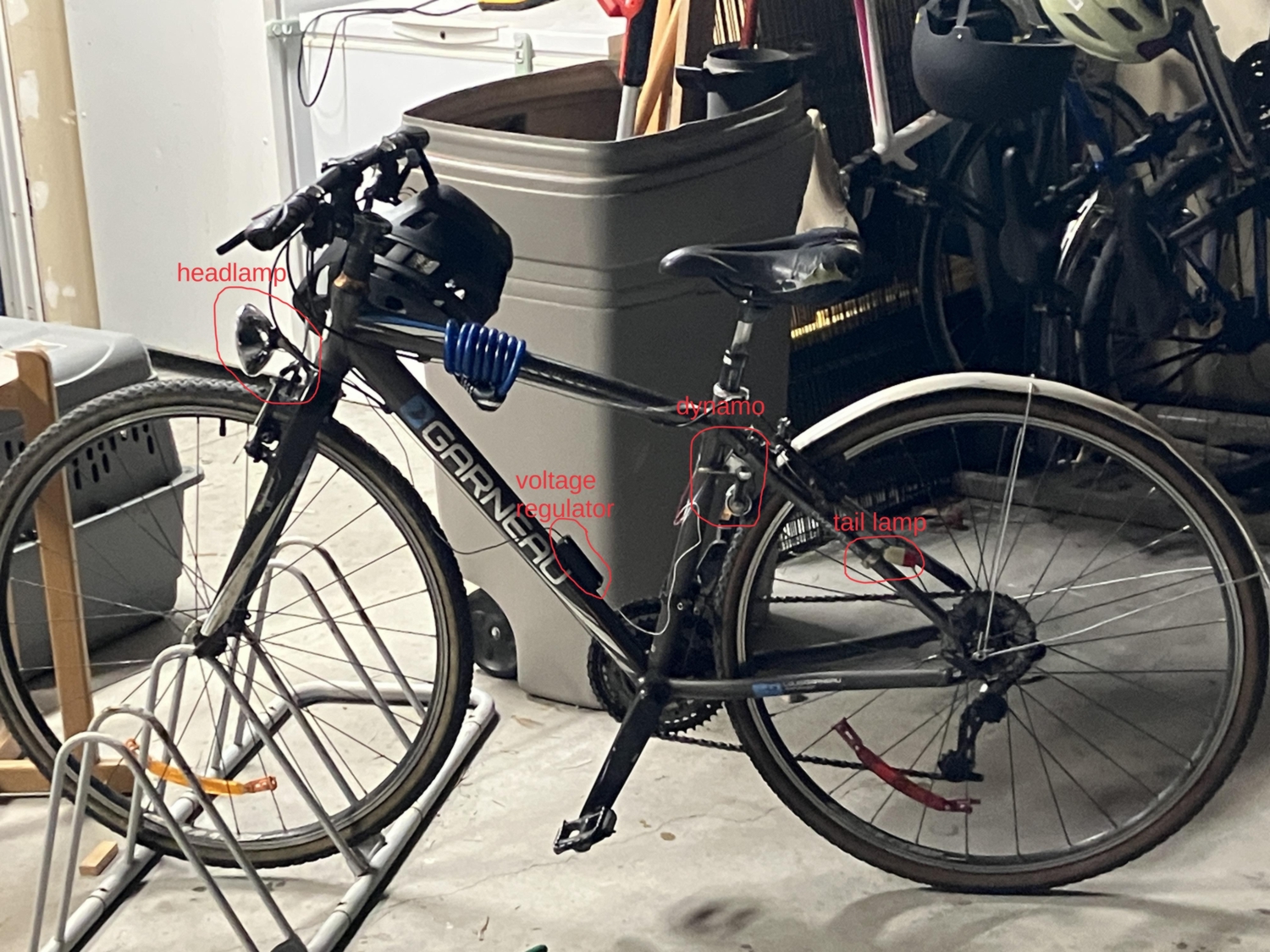
Recently finding the need to bike home in the dark, and not wanting to regularly charge a battery-powered light, I decided to buy a used bicycle dynamo (for $40) to power a front and rear bike light. The dynamo is a bottom-bracket dynamo, which means it’s meant to be mounted on the bottom bracket (where the pedals are mounted) and is driven by the tire tread. This contrasts with bottle dynamos which are driven by the sidewall of the tire, potentially wearing out the sidewall. There was no space to mount the dynamo on my bottom bracket, but thankfully it…
-

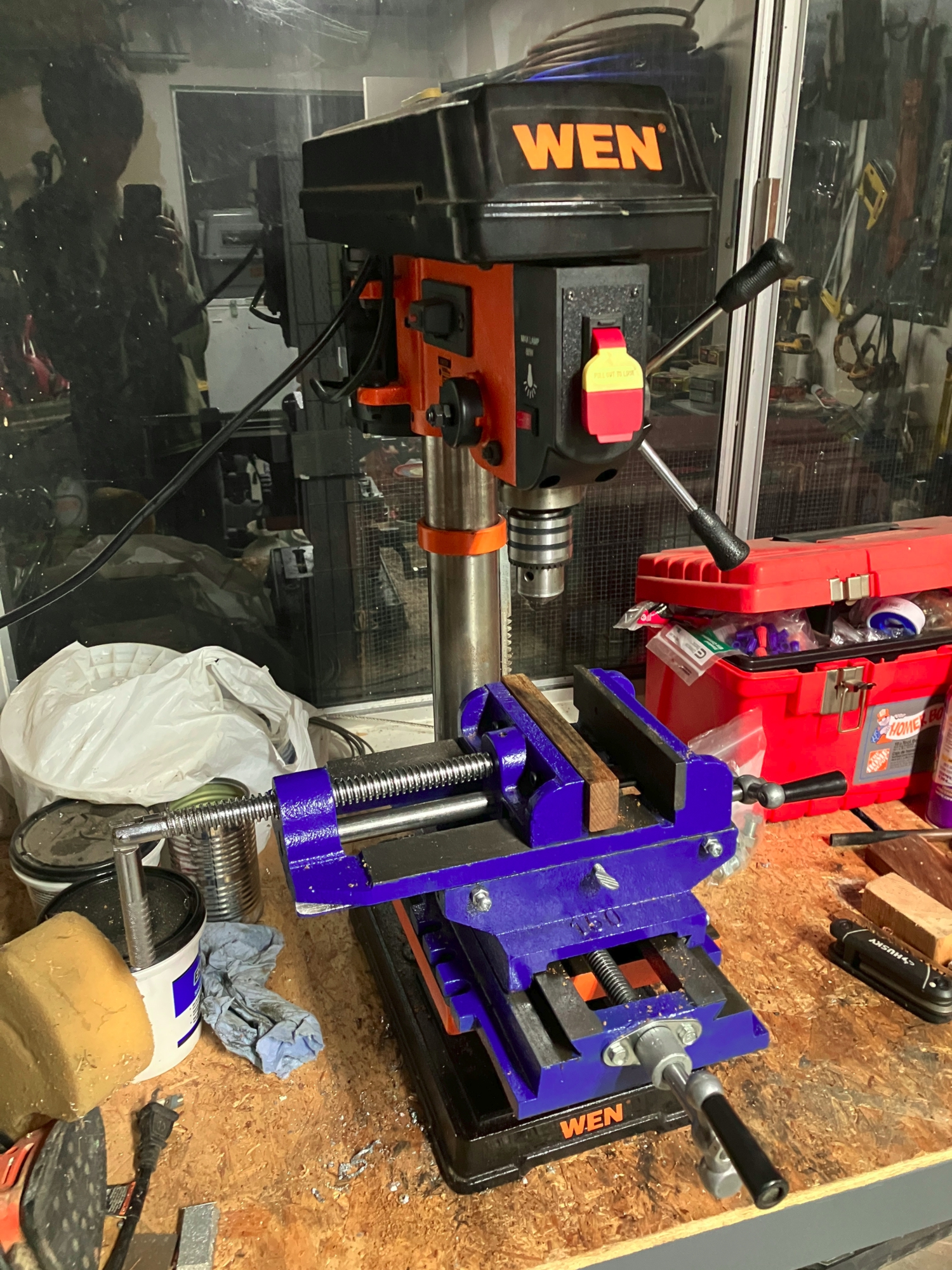
I recently bought a used cross-slide vise on craigslist for $35. It is a machinist’s vise mounted on two ways at right angles, with leadscrews controlling the vise’s movement along each way. It’s meant to be used on a drill press so holes can be located in the same manner as in a vertical milling machine. The vise is also useful since it allows the piece to be moved under the spindle without loosening and re-clamping it as in a normal machine vise. The vise was originally bought at Harbor Freight, a store known for affordable but low-quality tools. …
-

This event took place at the San Mateo Library. I mainly spent the 3 hours working on a broken IBM Selectric typewriter; I’ve had some experience restoring manual typewriters. The owner had taken it to a repair shop because the keys were a bit sticky, and it had come back broken. It appears the repairman had put a lot of oil and grease in the typewriter, which had gummed some things up. Wikipedia has a detailed description of the Selectric’s mechanism here, though it’s rather meaningless unless you have it in front of you to look at. So …
-
This Fixit Clinic occurred at the Maker Nexus in Sunnyvale. The first item was a Saeco Vienna Plus espresso machine. It automated the entire brewing process, including grinding and measuring the coffee, dispensing it into the “brew group” (the removable assembly where the actual brewing takes place), tamping it down, forcing water through the grounds, and ejecting the puck. Essentially, it worked as follows: A burr grinder both ground the coffee and pushed it into the dispenser. The dispenser was a small chamber with a trapdoor in the bottom to release the coffee into the brew group, and one movable…
-

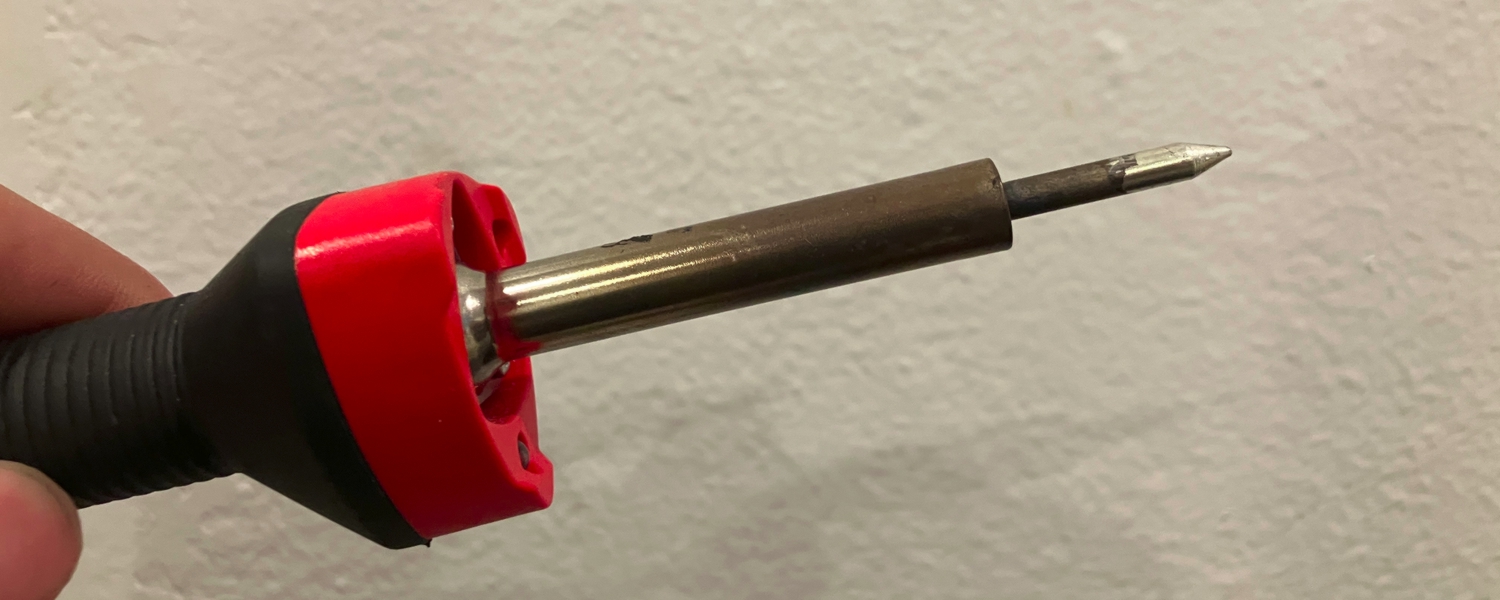
Soldering iron tips are made of copper plated with a very thin layer of iron. Unfortunately, this plating can oxidize if you don’t clean and “tin” it (that is, coat it with solder to protect it), and this can be very annoying because the oxidation is difficult to get off and prevents the solder from wetting the tip. There are a number of ways to get stubborn oxidation off. The recommended way is use some sort of tinning compound designed especially for this purpose, like sal ammoniac. Over the years, I’ve tried a few alternative methods, mostly without success. First…
-

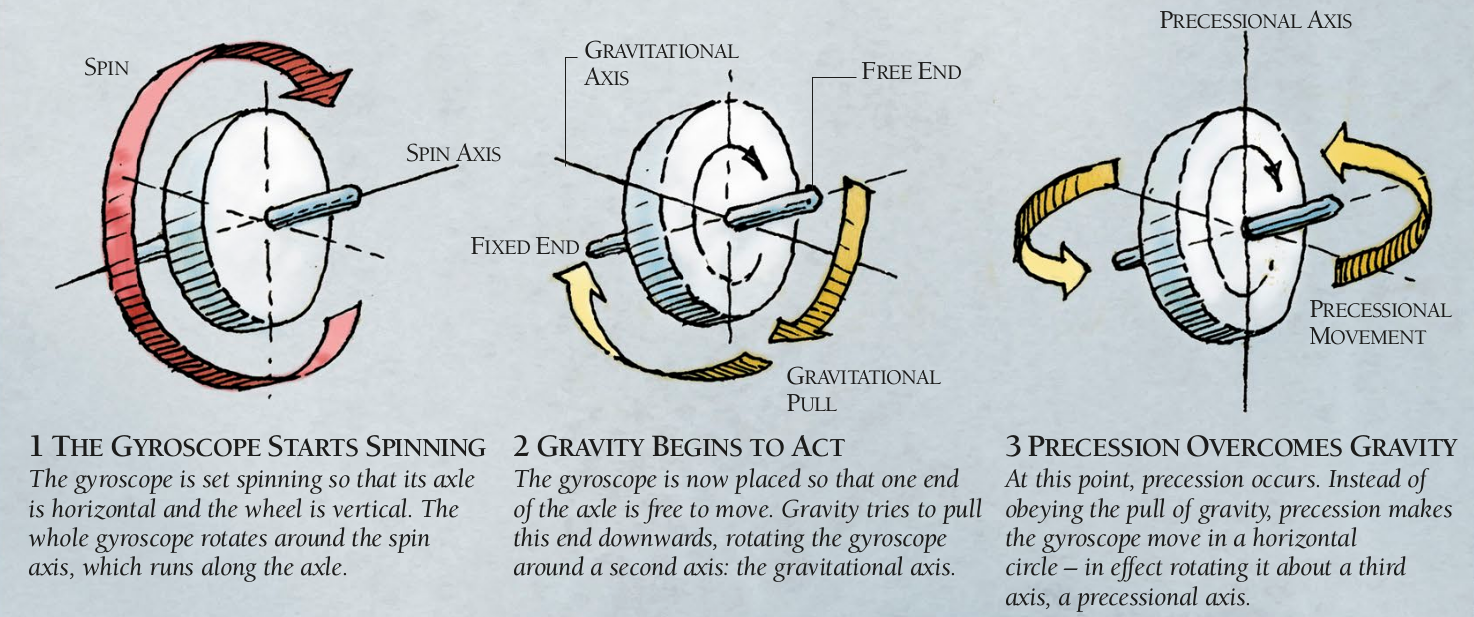
A spinning gyroscope can balance on a pivot, defying gravity by remaining horizontal while resting just on the tip of its axle. Instead of falling off the pivot, the gyroscope circles around it. The explanation for this amazing feat lies in the effects of precession. Like all other objects, the rotating wheel of the gyroscope is subjected to gravity. However, as long as the gyroscope spins, precession overcomes gravity by transforming it into a force that causes the gyroscope to circle instead of falling. The Way Things Work by David Macaulay and Neil Ardley At the suggestion of my physics…