-

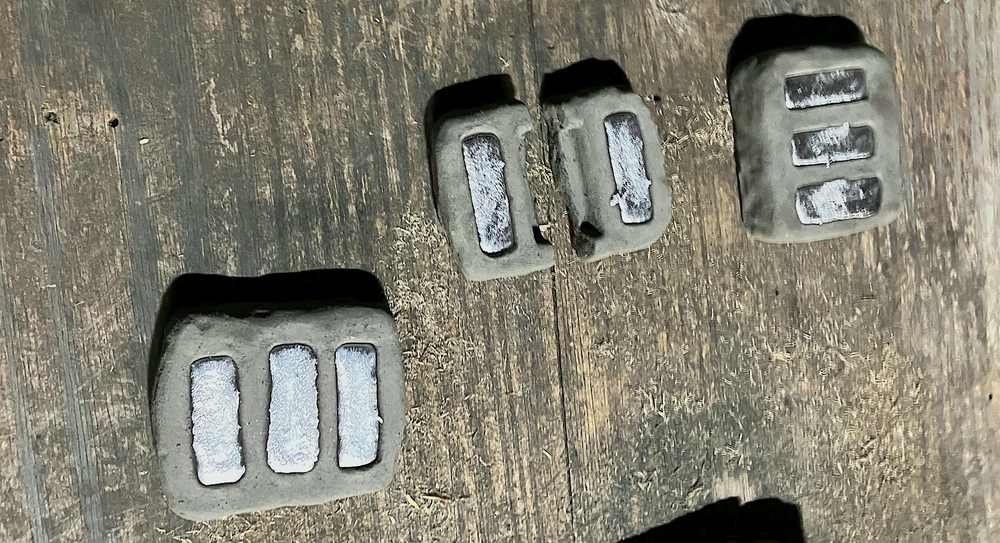
Summary A very good material for making ingot molds is a 2:1 mixture of sand and clay This preparation is inexpensive, heat-resistant, does not require firing, and can be recycled Molds are formed by pressing 3D-printed patterns into a block of sand-clay Material In a blog post from 2 years ago, I wrote that “I simply mixed dirt with enough sand to prevent cracking and formed it into very simple molds that by virtue of their porosity were really temperature-resistant.” Since then I’ve done some more experimentation, and found that for rough molds, like those for ingots, the ideal …
-

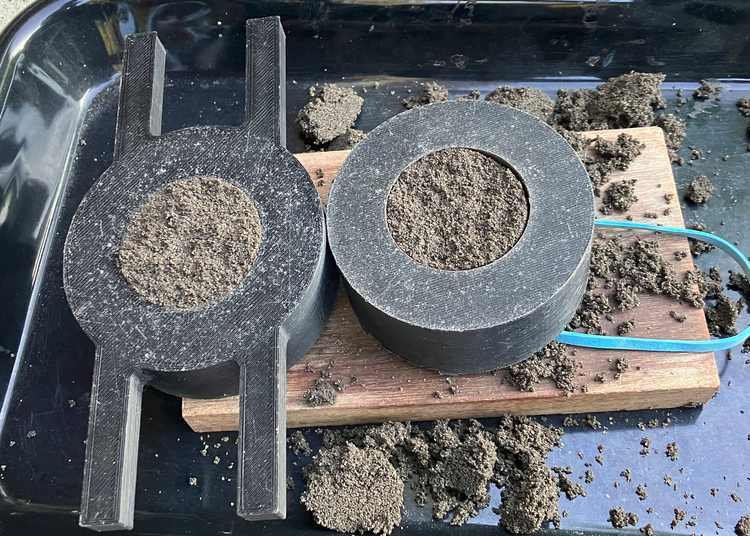
Summary I performed various tests on my DIY greensand, both to evaluate the tests’ reliability, and also the sand’s characteristics A microscope showed that my sand was angular and had a wide range of particle sizes The tensile strength test showed my sand was much weaker than industrially-used greensands. After refining my procedure, I was able to get moderately reliable results The compactability test showed that my sand had a higher unrammed density than industry sands, and gave very reliable results. The shatter test showed that my sand was about as tough as industrial sands, and gave reliable results. Introduction…
-

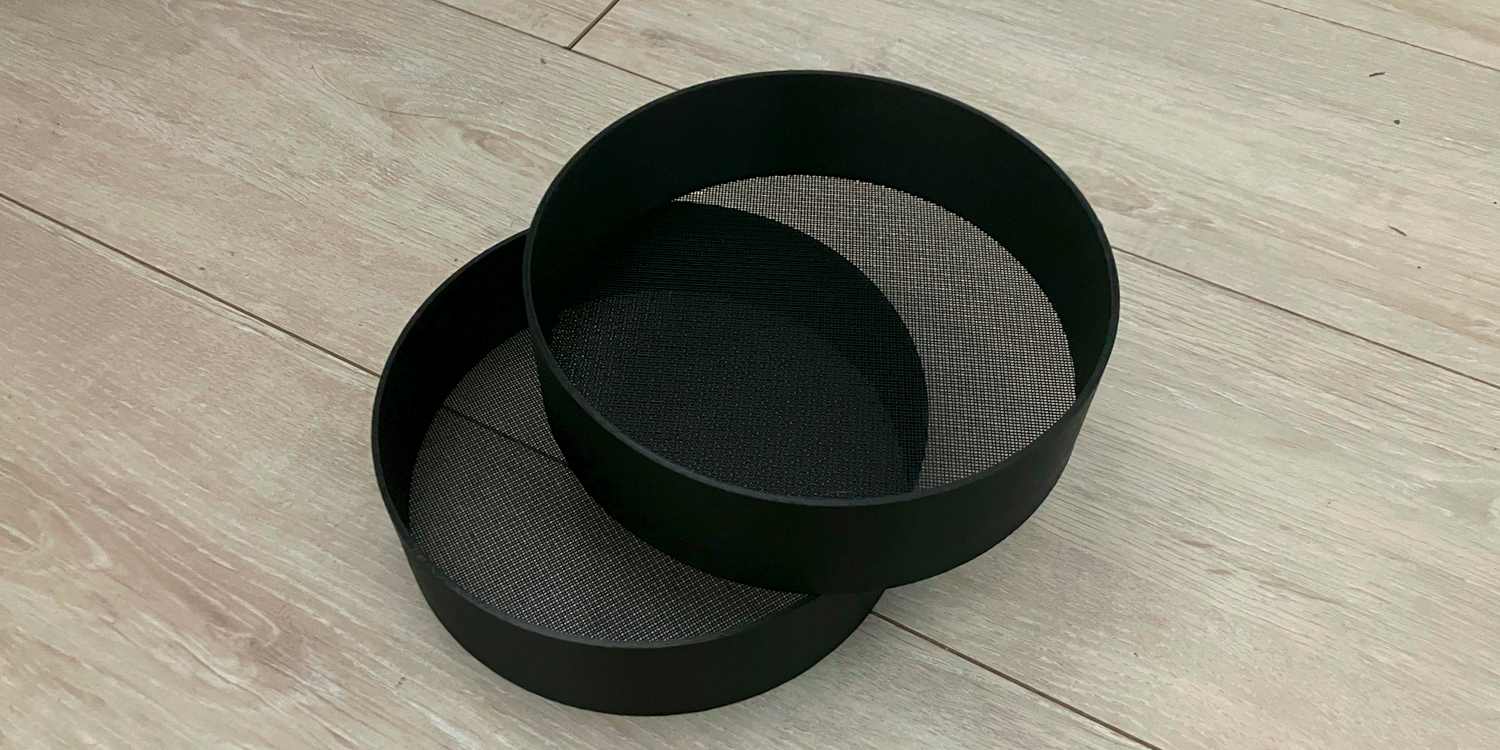
Summary Through trial and error, I found the print settings that allow very fine sieves to be 3D-printed effectively. I also devised formulas for determining the appropriate infill percentage and thickness of such sieves. Introduction I recently found the need to sift store-bought sand to separate out the finer particles, with a targeted particle size of <0.4–0.5 mm (< 35–40 mesh). I considered using a kitchen sieve or a piece of window-screen, but found that they both had a hole size of about 1.5 mm (14 mesh), making them too coarse for my purposes. Since I couldn’t find any other…
-

Here’s an essay I wrote in my 12th-grade English class about David Macaulay and Neil Ardley’s The Way Things Work. The Way The Way Things Work Works As anyone who has ever done so can testify, reading textbooks is really boring. Often one finds themself going over the same paragraph over and over, reading but not comprehending anything. But in The Way Things Work (TWTW), illustrator David Macaulay shows the power of illustrations over text in creating the mental image that leads to true understanding, rather than documenting someone else’s line of reasoning. For this purpose, …
-

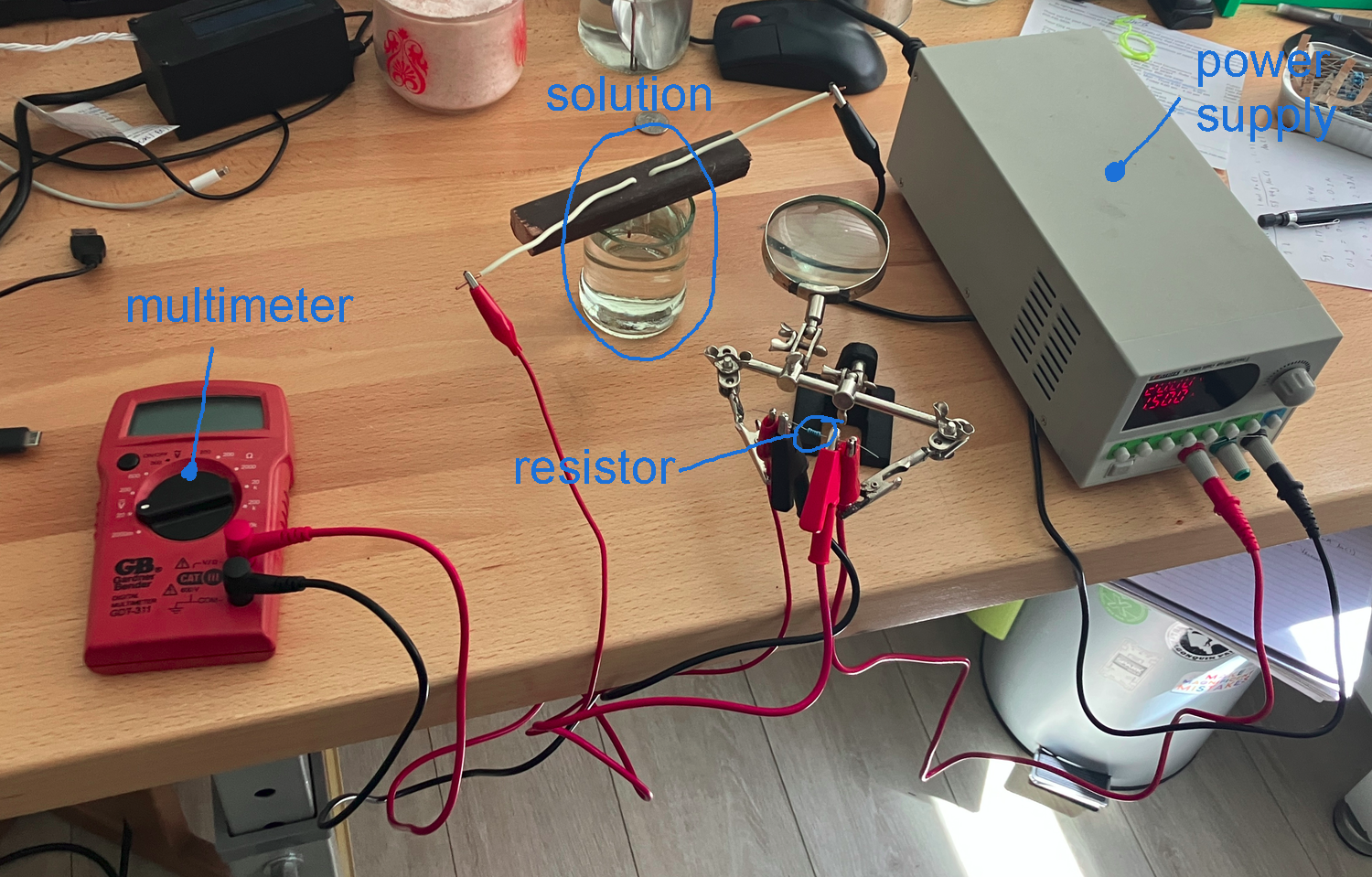
Abstract My goal was to measure the resistance of a dilute solution using tools available to me, and relate it to the solution’s concentration. A resistor was wired in series with the solution, and a DC power supply and a multimeter were used to measure the relative changes in input voltage and voltage across the resistor. This allowed the solution’s resistance to be calculated. I found a strong linear relationship between calculated resistance, and solution concentration. Introduction I was recently doing some more experiments with clay, which involved rinsing dissolved salts from a clay-water slurry. I wanted some way of…
-
Are you working on a project consisting of FEM simulations done in FreeCAD? Are you using trial-and-error to converge your models? Or perhaps just running simulations on variations of the same basic geometry? Are you getting brain damage from the tedious and repetitive work of setting up simulations, and then babysitting them as they run??!! Well — fret no more! Introducing: an Automatic FreeCAD FEM Library! It contains functions designed to run without user input, almost as though it’s intelligent… but artificially. Using this library is free for one month, and then you’ll be automatically charged our monthly subscription fee…
-

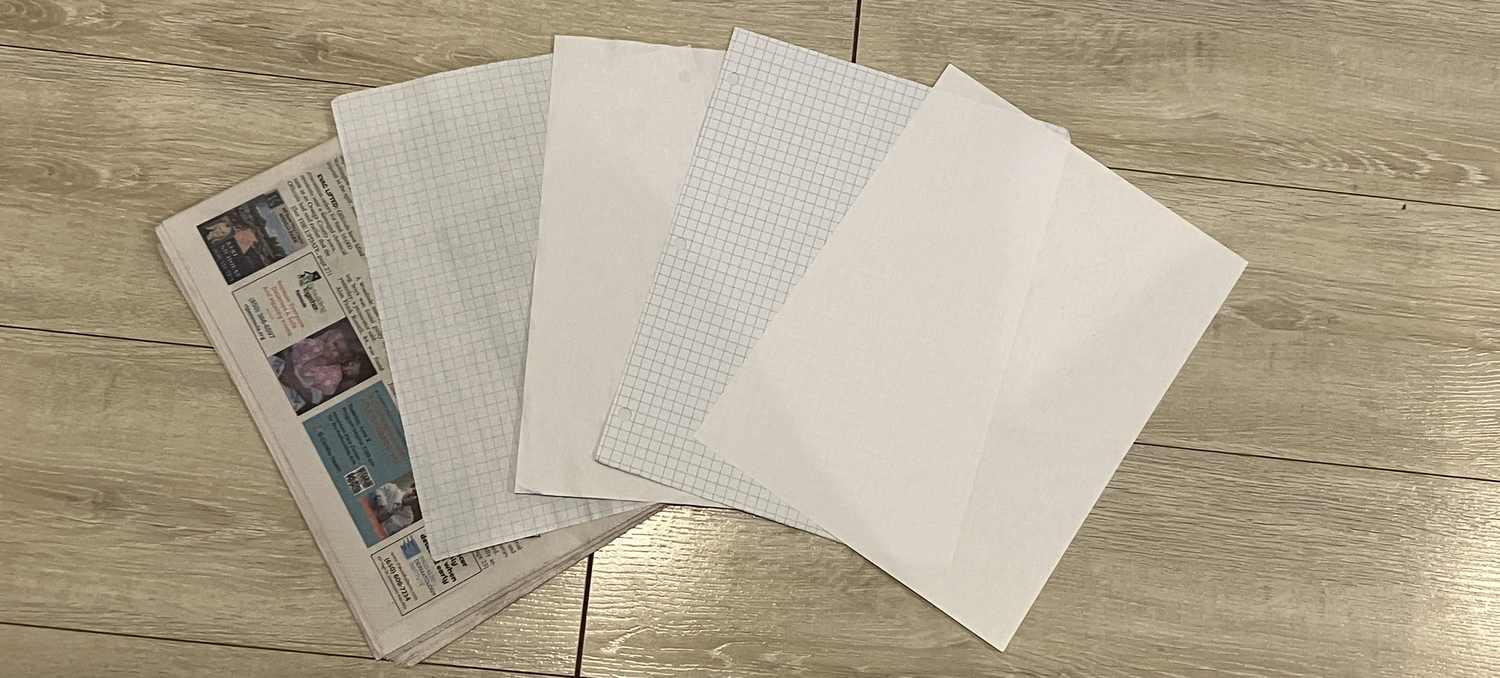
Summary I wanted a filter paper, made from household materials, that could filter out clay particles. Printer paper and notebook paper fulfilled this purpose, but passed water very slowly I found that by soaking paper in vinegar to remove their calcium carbonate filler, they would pass water more freely. Requirements for Filter Paper I recently needed to filter water out of a clay slurry for one of my projects. Since laboratory filter-paper wasn’t available, I had to try some common household filtration materials. In Chemical Manipulation, Michael Faraday writes, 487. […] Unsized paper, cloth, flannel, tow, sponge, sand, pulverized …
-

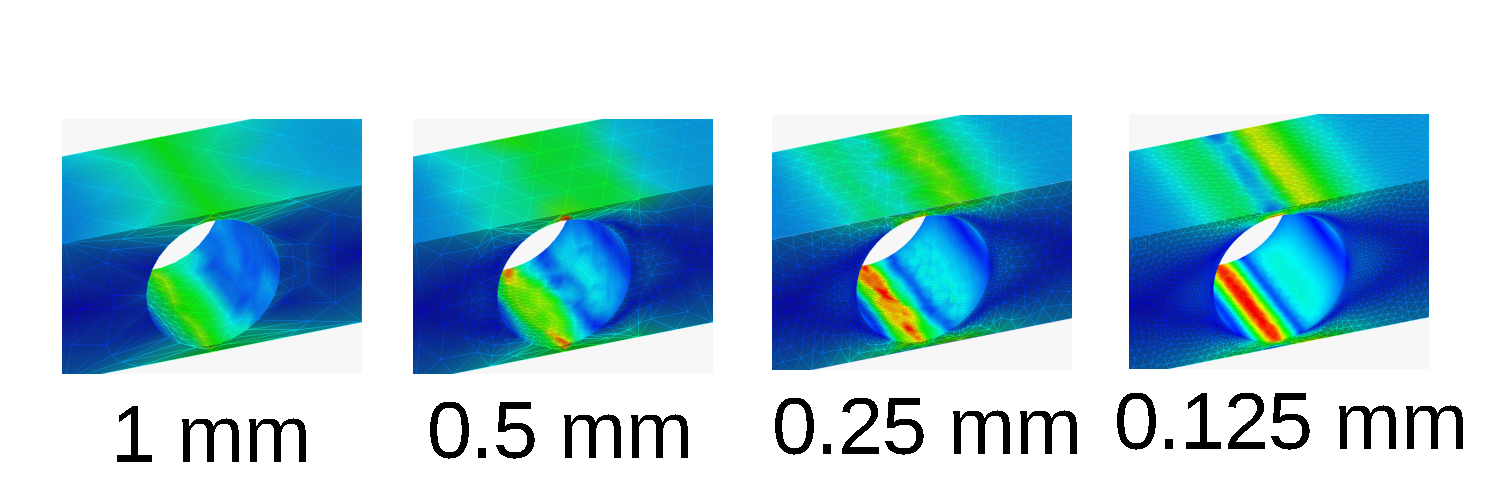
Introduction An essential idea in finite element modelling (FEM) is convergence, the idea that as you make the simulation more and more lifelike, its results will converge to the real-life stress state. In most simulations, which mainly use single-point or rigid-body constraints, the main variable that must be converged is element size: as you make the elements smaller and smaller, the simulation will become truer and truer to reality. In this case, the procedure to obtain convergence is fairly simple: run successive simulations reducing the element size each time — for example, by halving it until the results — …
-

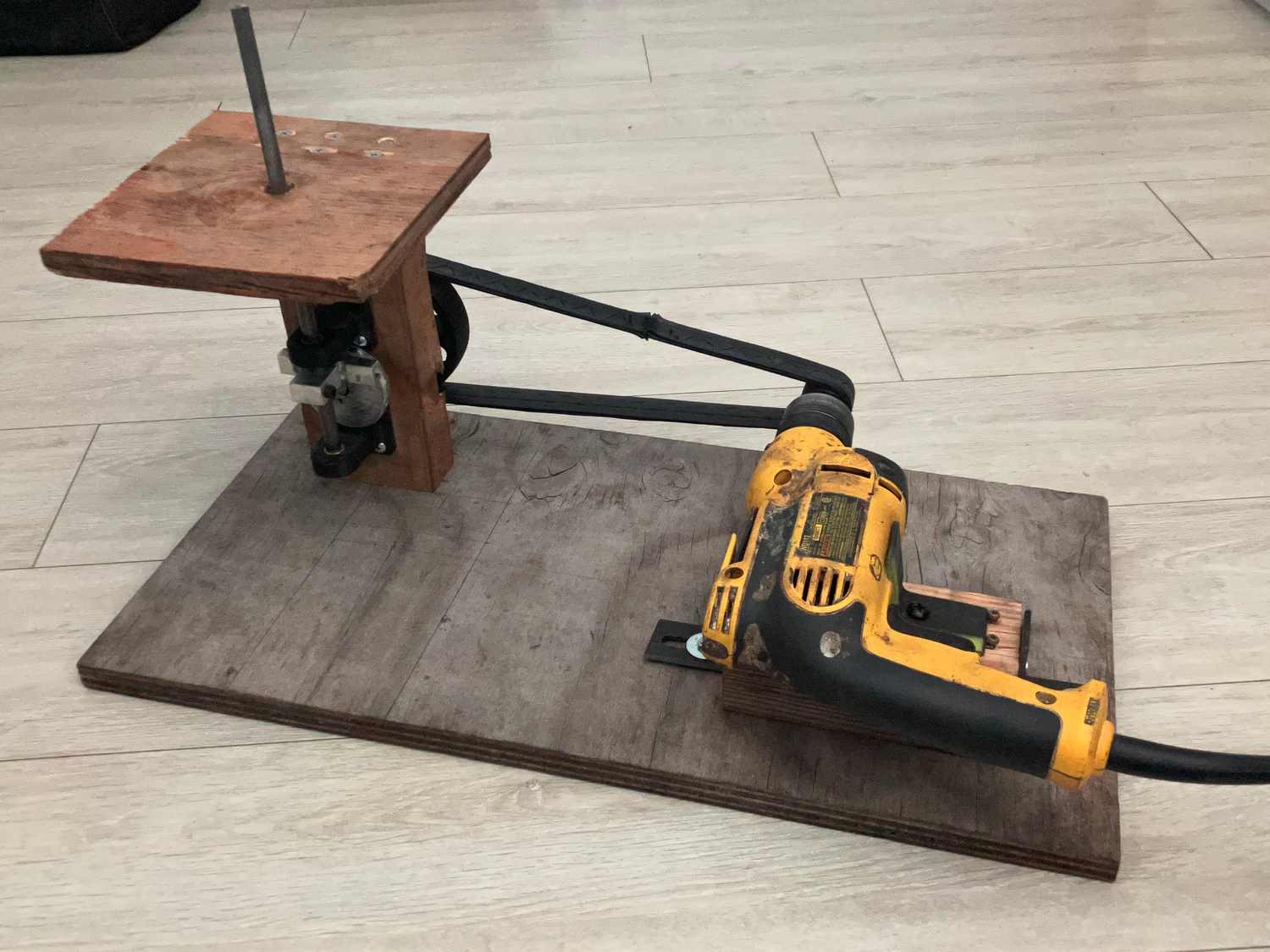
Summary I wanted a die filer Design loads and safety factors were chosen Calculations were done to verify that none of the parts would fail in operation The die filer was manufactured from wood, aluminium, and 3D-printed plastic. Introduction I’ve been wanting to make a die filer for some time now. It is a power-driven file that allows you to easily cut complex shapes. Die filers are not meant for a very high material-removal rate; rotary files and cold-chisels exist for that purpose. Design Parts of the Die Filer The file is run up and down on a “filing shaft”,…
-

This Repair Café took place from 11:00 AM to 3:00 PM at the Tzu Chi’s Northwest Region Office. Tzu Chi is a humanitarian organization whose members are Buddhist, but who do not preach to those they aid. I worked first on a Panasonic toaster oven. It had 5 heating elements: 1 clear quartz element and 2 diffuse quartz elements on top, and 2 tubular elements on the bottom. The diffuse quartz element consisted of a nichrome wire in a translucent quartz tube, emitting IR at a longer wavelength and lower intensity than the clear element, which had a tungsten wire…