-

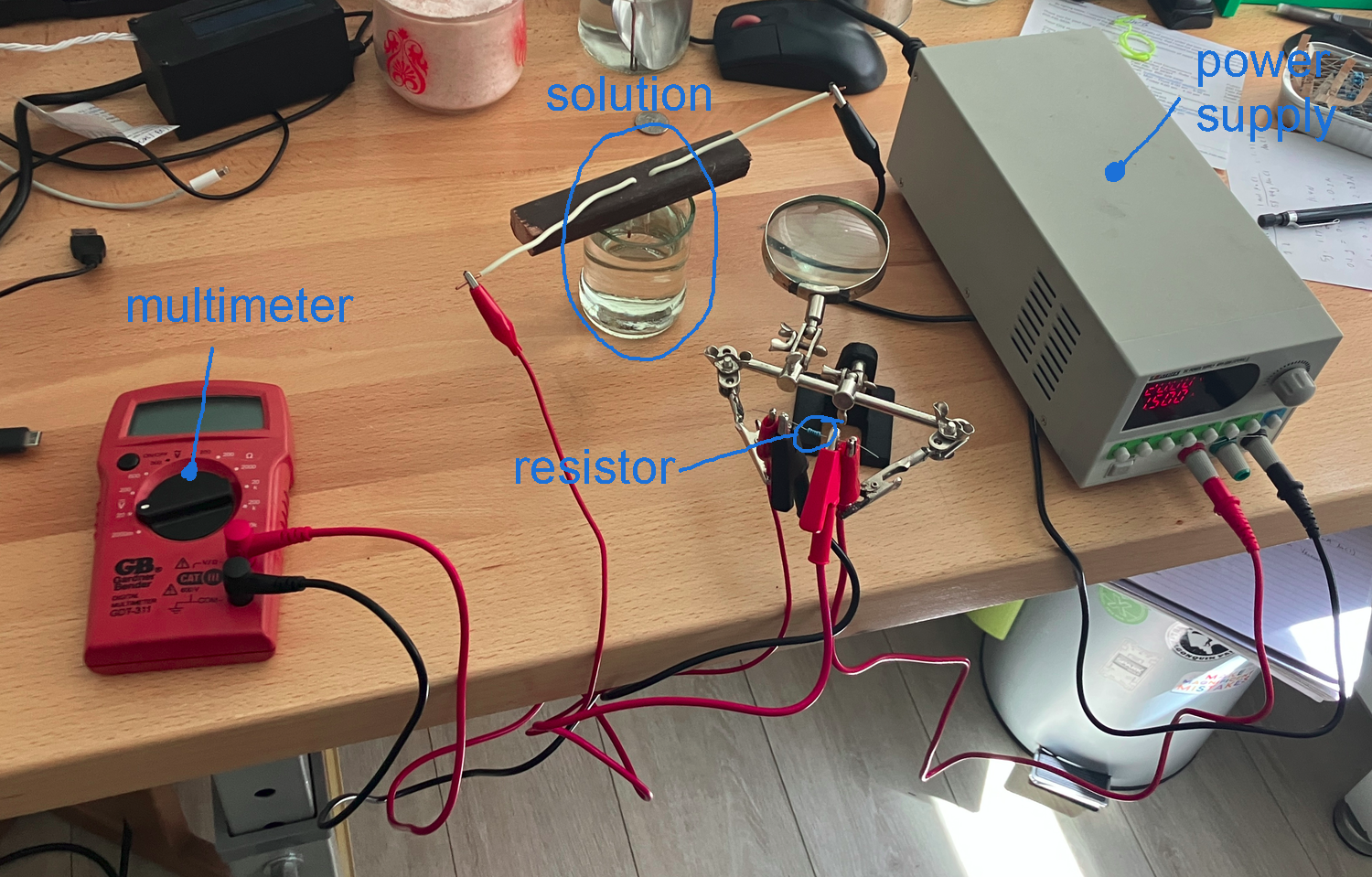
Abstract My goal was to measure the resistance of a dilute solution using tools available to me, and relate it to the solution’s concentration. A resistor was wired in series with the solution, and a DC power supply and a multimeter were used to measure the relative changes in input voltage and voltage across the resistor. This allowed the solution’s resistance to be calculated. I found a strong linear relationship between calculated resistance, and solution concentration. Introduction I was recently doing some more experiments with clay, which involved rinsing dissolved salts from a clay-water slurry. I wanted some way of…
-

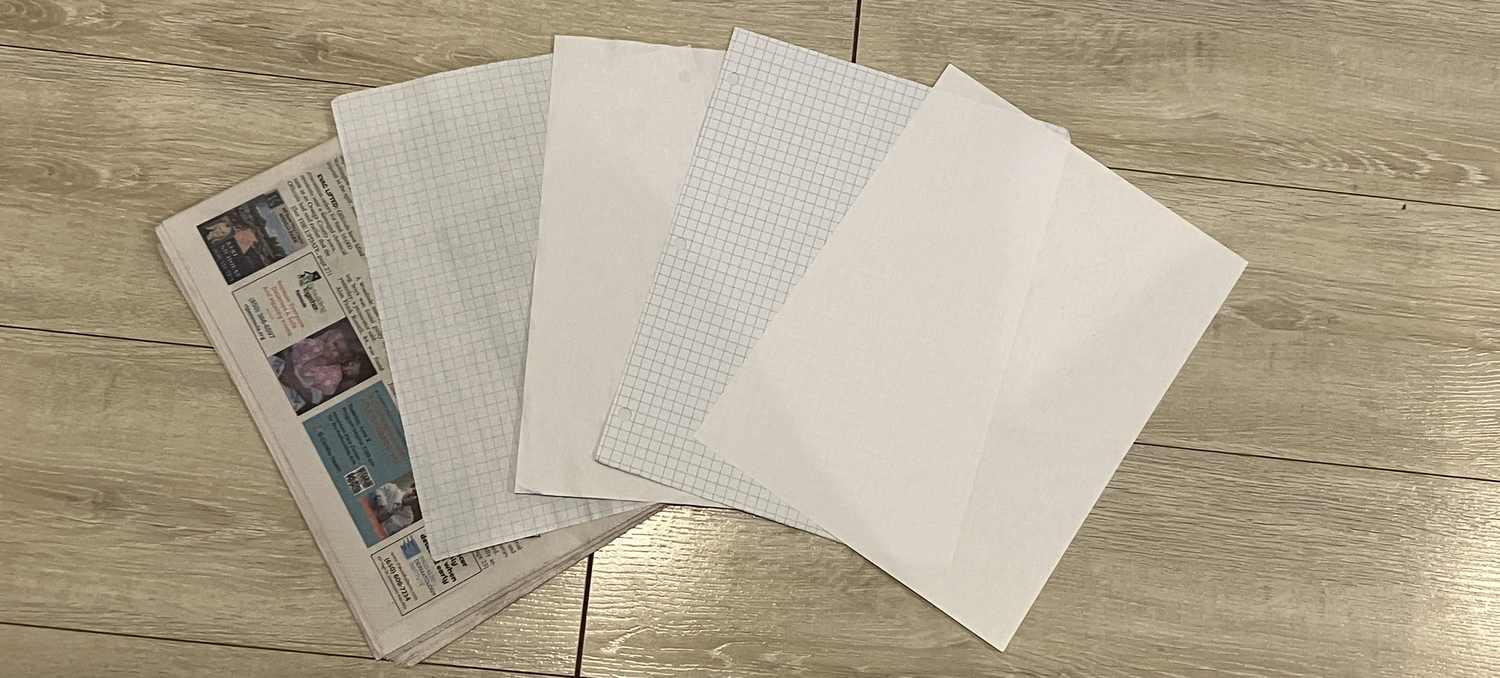
Summary I wanted a filter paper, made from household materials, that could filter out clay particles. Printer paper and notebook paper fulfilled this purpose, but passed water very slowly I found that by soaking paper in vinegar to remove their calcium carbonate filler, they would pass water more freely. Requirements for Filter Paper I recently needed to filter water out of a clay slurry for one of my projects. Since laboratory filter-paper wasn’t available, I had to try some common household filtration materials. In Chemical Manipulation, Michael Faraday writes, 487. […] Unsized paper, cloth, flannel, tow, sponge, sand, pulverized …
-

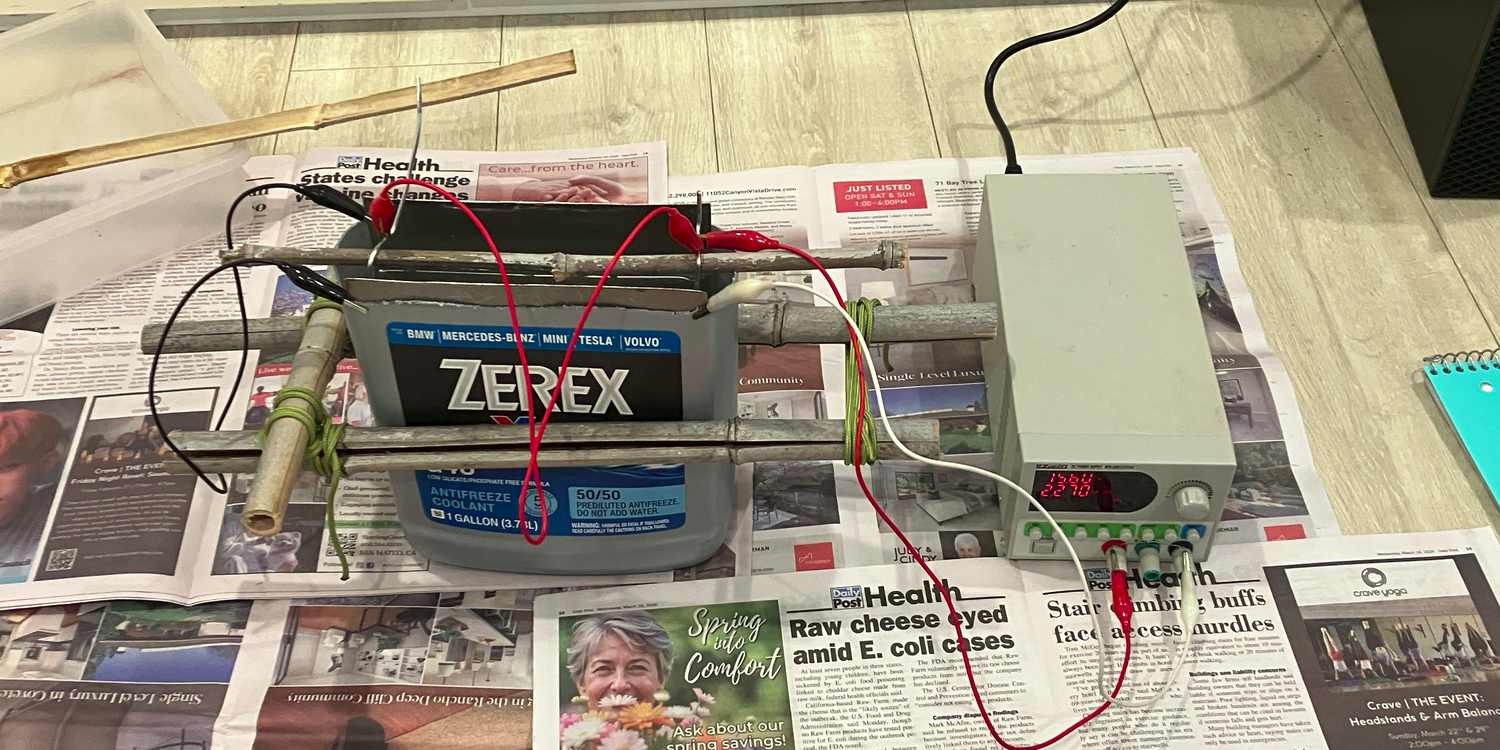
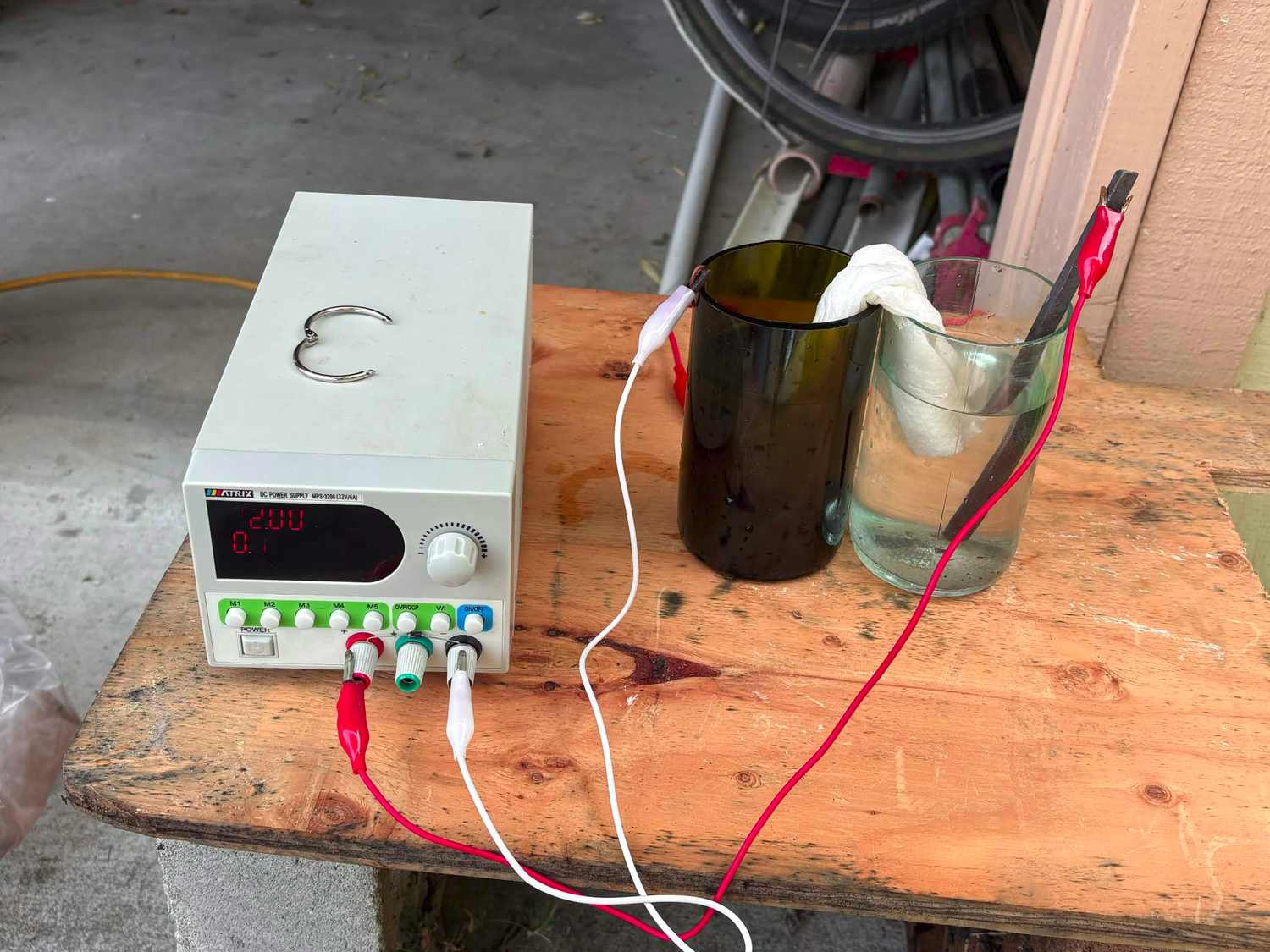
Summary I wanted to anodize aluminium parts at home, using a sodium bisulfate electrolyte An appropriate anodizing current density was found by experimentation An easy and effective way of racking parts was devised Cooling was found necessary during the anodization of high-surface-area parts Electrolyte acidity was measured by titration The anodized parts were dyed and sealed Introduction I’d previously done some experiments trying to anodize aluminium with household chemicals, avoiding the need to buy sulfuric acid. The only process that succeeded was to make sulfuric acid by the electrolysis of Epsom salt (magnesium sulfate) in a partitioned electrochemical cell, …
-

In Which I Am Nerd Sniped Some time in late 2024, I overheard a classmate talking about anodizing aluminium, for the purpose of laser-engraving it. They were interested in how it might be done at home. I understood the concept — using electricity to grow a thick oxide layer — and I wondered if it could be done with household chemicals. Of course, I had to try it myself, so I pursued the project on and off for the next few months. Introduction Aluminium is an incredibly reactive metal, but its oxide is inert and durable. The thin layer of…
-

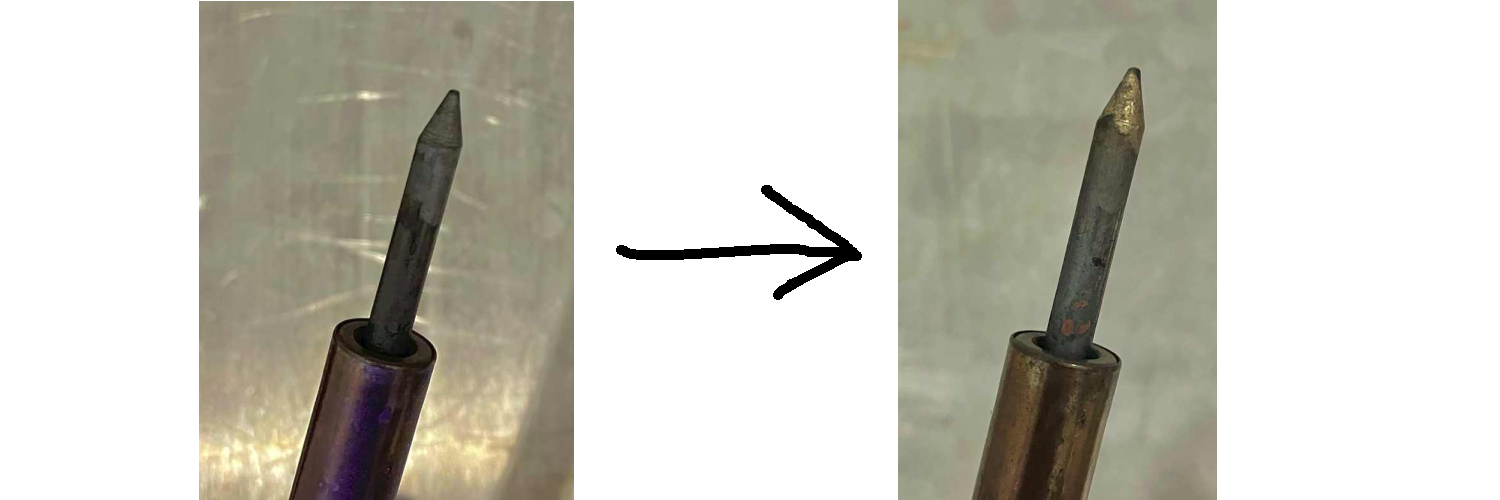
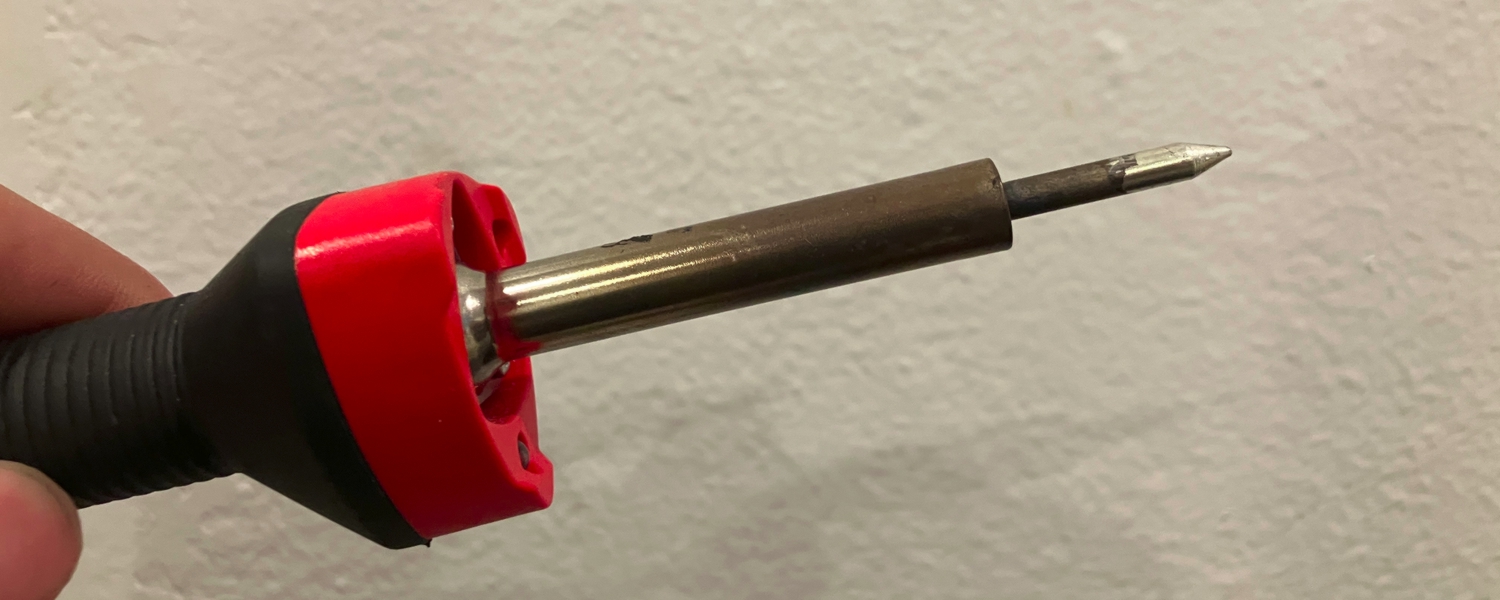
A common flux in soldering is zinc chloride solution. It is supposedly quite effective, though its corrosiveness makes it unsuitable for electronics. I tried using it as a tip cleaner for soldering irons that had oxidized to the point where they couldn’t be tinned with rosin-core solder. Zinc chloride (ZnCl2) is easy to make by yourself by dissolving zinc (Zn) in a jar of muriatic acid (HCl, 10M). The reaction was very vigorous for the first few minutes; the glass jar got noticeably warm, and steam came out of the jar. After a few hours I could still …
-

Soldering iron tips are made of copper plated with a very thin layer of iron. Unfortunately, this plating can oxidize if you don’t clean and “tin” it (that is, coat it with solder to protect it), and this can be very annoying because the oxidation is difficult to get off and prevents the solder from wetting the tip. There are a number of ways to get stubborn oxidation off. The recommended way is use some sort of tinning compound designed especially for this purpose, like sal ammoniac. Over the years, I’ve tried a few alternative methods, mostly without success. First…
-

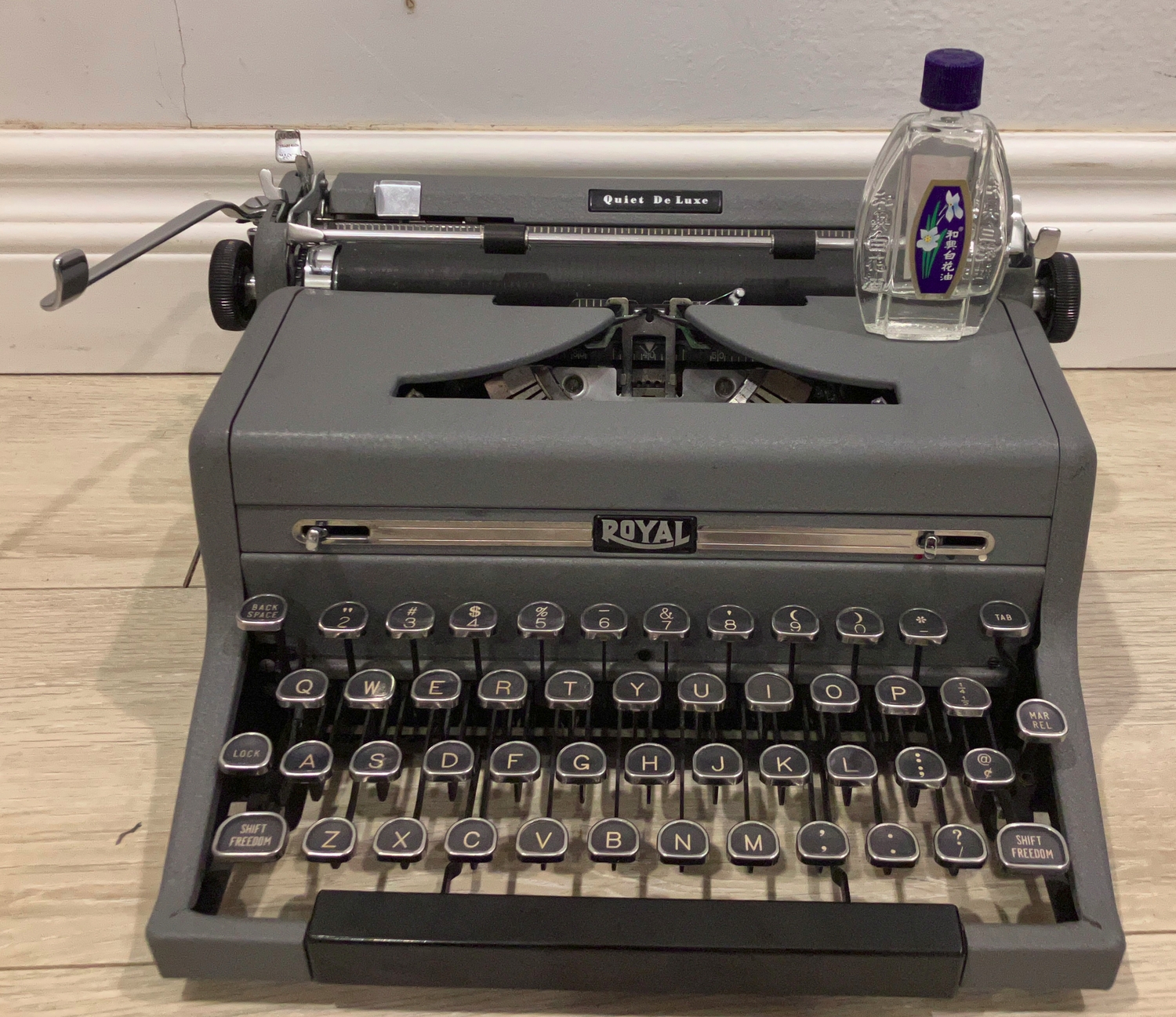
Introduction There is a medicinal ointment popular in Hong Kong called 白花油 (“White Flower Oil”) that produces a cool, minty feeling when rubbed on the skin and is used as a pain and itch reliever. (A similar product called 风油精 (“Wind Oil Essence”) is used in Mainland China.) Interestingly, one of its main ingredients, which makes up 40% of it, is methyl salicylate, a chemical often used to soften rubber. The specific use case I had in mind was restoring some grip to the time-stiffened rubber feet of an old typewriter. They had deteriorated to the point where the …
-

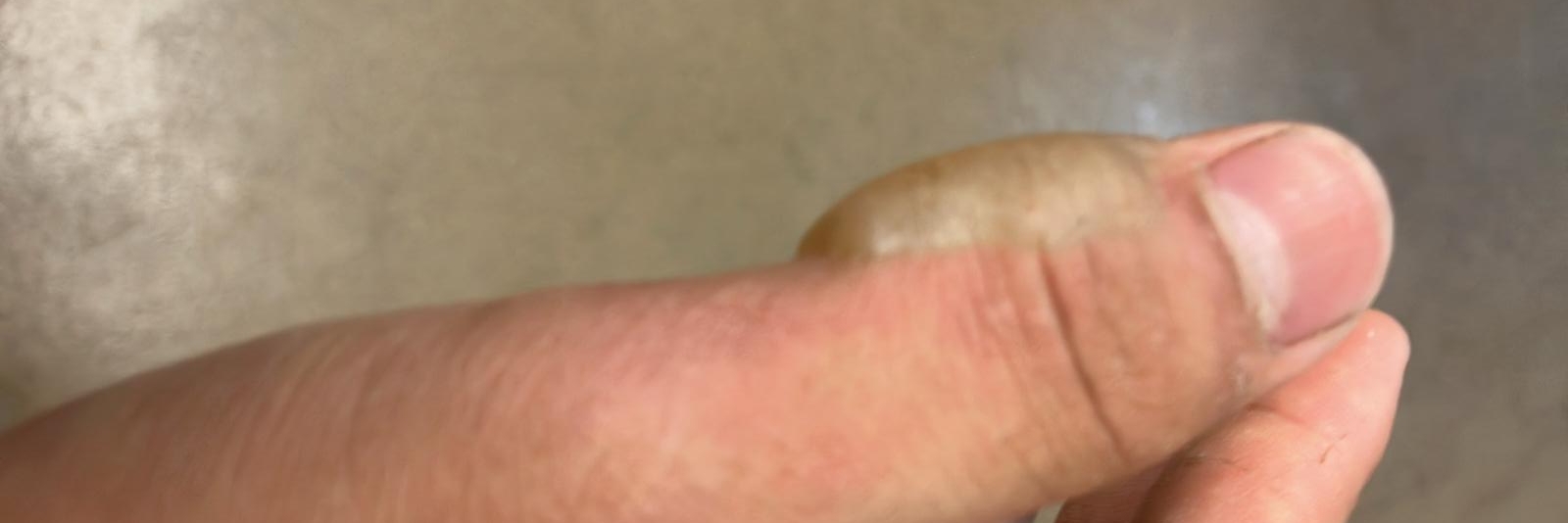
The other day, as a result of playing with gasoline, I got some second-degree burns. Eight years ago, in preparation for a backpacking trip to Sword Lake, my dad bought a 1-gallon can of Coleman Fuel (a petroleum distillate similar to gasoline but without the engine-performance-enhancing additives), to fuel his Coleman 442 pressure stove. After using it for a few camping trips and to melt zinc, the fuel was finally finished as I continued my metal-casting project over this summer break. Of course, the fuel can wasn’t exactly empty. I did my best to pour out the …
-

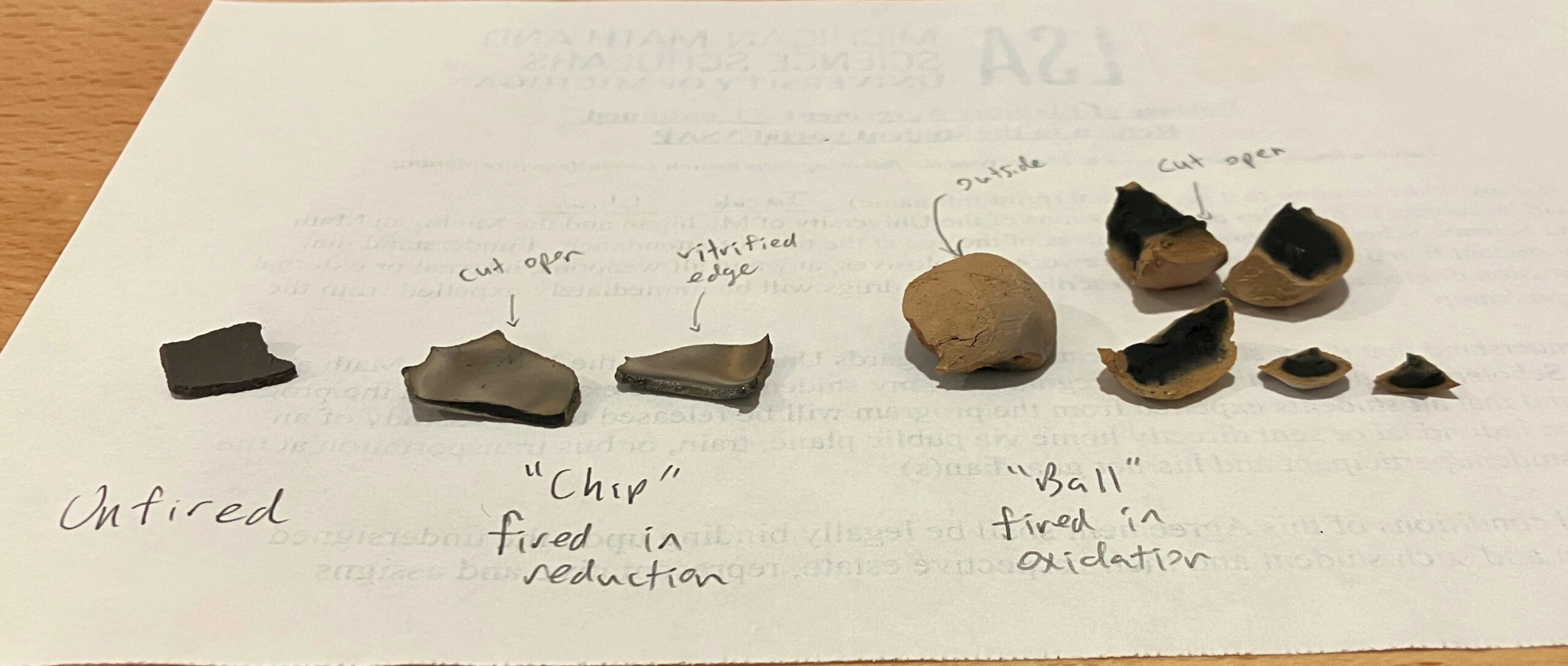
Introduction Lately, when not crushed under the tedium of self-studying two AP exams, I’ve been trying to refine the clay soil from my backyard into clay. A post about that is coming. This post is about an interesting effect I noticed today as I test-fired pieces of clay. Basically, clays often contain iron oxides (compounds containing different ratios of iron and oxygen with distinct properties) as an impurity, which gives them their color. Depending on whether the kiln’s atmosphere is oxidizing or reducing, these oxides can be transformed into one form or another during firing, changing the surface color of…
-

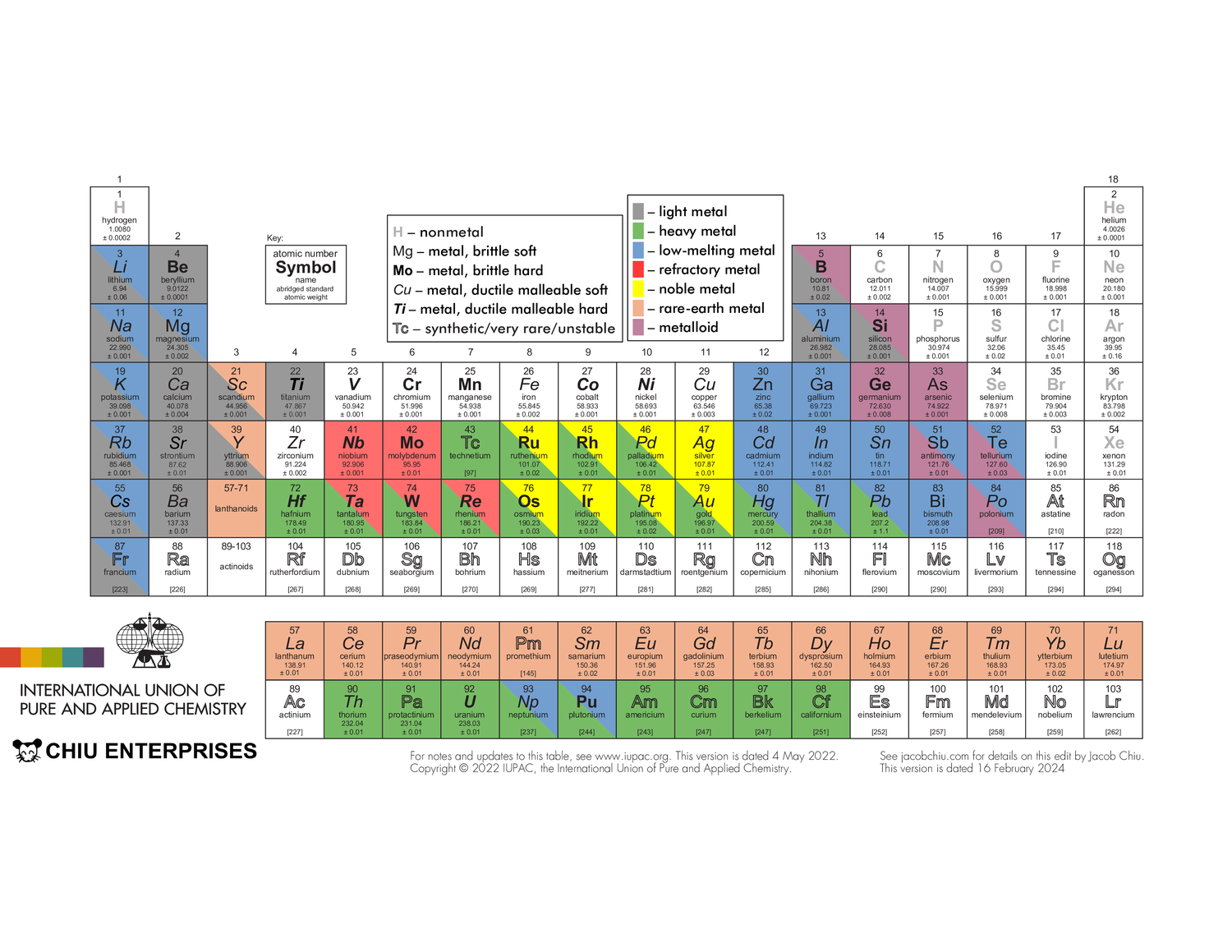
Introduction I have a … thing for the periodic table. In elementary school, I copied it twice, by hand, of my own volition. The first attempt was crooked with many spelling errors and multiple different pen colors. The second was neater, but element 8 was still written as “oxegen”. Last year, in the never-ending quest to discover an “ideal” periodic table that has all the information you need, yet is easily readable and printable, I took the one from the International Union of Pure and Applied Chemistry and edited it. The IUPAC’s periodic table is available here. Americans: note …